
Best Types of Fans for Singapore Homes
In a climate that runs warm and humid all year, a fan is not a luxury in Singapore, it is basic survival kit. But “buy a fan” hides a lot of choices: ceiling or standing, tower or bladeless, cheap AC motor or efficient DC motor. Pick well and you get quiet, cheap cooling for most of the year. Pick badly and you get a rattly box that nudges warm air around. Here is how to choose the right type for each room.
Ceiling fans: the workhorse
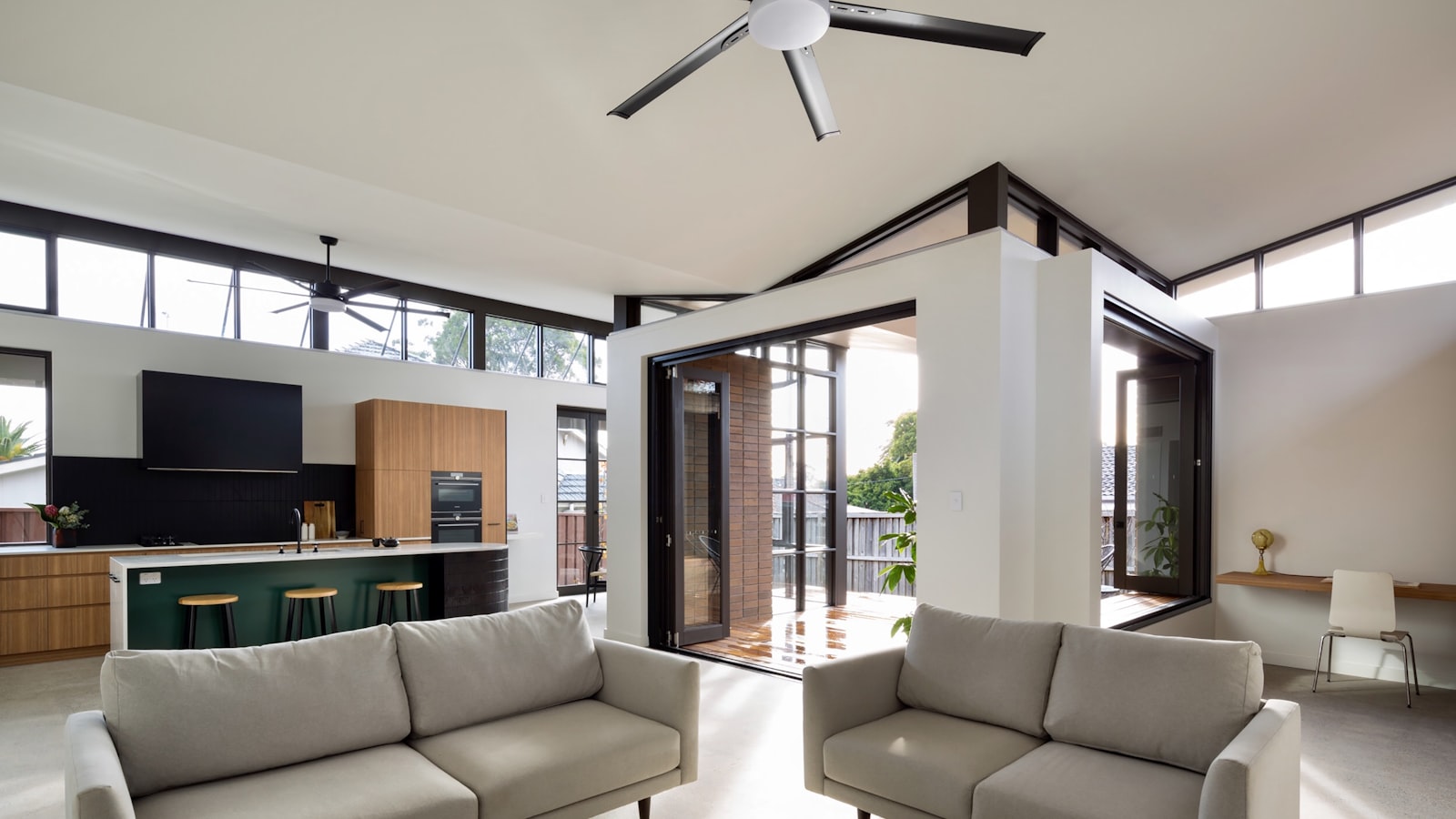
For sheer efficiency, nothing beats a ceiling fan. Mounted overhead, it pushes a broad column of air down across the whole room, and because the blades are large it moves a lot of air slowly and quietly rather than blasting a narrow jet. For living rooms and bedrooms, this is usually the best value cooling you can install.
The main considerations are blade span and ceiling height. Bigger rooms need bigger spans to circulate air properly, while you want enough clearance below the blades for safety and headroom. Many models now include lights and remote controls, which is handy in a bedroom.
Standing and pedestal fans: flexible and cheap
Pedestal fans are the flexible all-rounder. They are inexpensive, need no installation, and you can wheel them to wherever you are sitting. Height and tilt are adjustable, and most oscillate to spread the breeze across a room.
The trade-off is that they take up floor space and only cool the area they point at. They are ideal as a supplementary fan, for renters who cannot install anything, or for directing airflow at a specific spot like a study desk or a kitchen while cooking.
Tower fans: slim and tidy
Tower fans trade raw airflow for a slim footprint and a tidier look. The tall, narrow design tucks neatly into corners and suits smaller rooms or minimalist interiors. Many include timers, remotes and oscillation.
Because the air outlet is narrow, they generally move less air than a good pedestal or ceiling fan, so think of them as comfort fans for bedrooms and small spaces rather than for cooling a large open-plan living area. They can also be fiddlier to clean inside the housing.
Wall-mounted and bladeless fans
Wall-mounted fans free up floor space and are a favourite in kitchens, bomb shelters used as store rooms, and tight service areas where a pedestal would be in the way. They deliver strong directional airflow from up high.
Bladeless fans, meanwhile, are prized for looks, safety around young children and easy cleaning, since there are no exposed blades. They tend to be quiet and stylish, but you usually pay a premium for less airflow than a conventional fan of similar size. Choose them for the design and safety benefits, not for maximum cooling per dollar.
DC motor vs AC motor
This is the single biggest factor for running cost, and it applies across fan types. The motor is what spins the blades, and there are two families.
- AC-motor fans: the traditional, cheaper-to-buy option. Reliable but use more electricity and often have fewer, coarser speed settings.
- DC-motor fans: newer, more efficient motors that draw far less power at comparable airflow, run more quietly, and offer finer speed control. They cost more upfront.
If a fan will run for hours every day, a DC motor usually pays for itself over time through lower bills. For a fan you use occasionally, an AC model may be fine. Either way, checking energy use before buying is smart; our guide to energy labels and tick ratings helps you compare like for like.
Airflow, reach and noise
When comparing fans, look past the number of speeds and focus on how much air the fan actually moves and how far it throws it. Airflow is sometimes quoted as cubic metres per minute (CMM); a higher figure means more air shifted, which translates to better cooling on a hot day.
Noise matters just as much, especially in bedrooms. A fan you run overnight should be quiet on its lower settings. DC-motor fans generally have the edge here. If you can, test a fan on its mid and low speeds before buying, since a fan that only cools well on its loudest setting is not much use at 2am.
High ceilings and HDB layouts
Most HDB flats have standard ceiling heights that suit regular ceiling fans with a short down-rod. If you have a maisonette, a loft or unusually high ceilings, you may need a longer down-rod to bring the fan into the effective cooling zone. For low ceilings, a hugger or low-profile fan keeps clearance safe.
Open-plan living-dining areas may benefit from a larger single fan or two fans to cover the space evenly. If you are working out how to lay out a compact home, our notes on small-flat space planning can help you position fans and furniture together.
When a fan beats aircon on cost
A fan does not cool the air; it cools you, by moving air across your skin so sweat evaporates faster. That makes it dramatically cheaper to run than air-conditioning, which actually chills and dehumidifies the whole room. For a large part of the Singapore year, a fan alone keeps you comfortable in the day.
The smart play for most homes is to lead with fans and reach for aircon only when it is genuinely needed, such as sleeping through the hottest nights. That habit alone can noticeably trim your bills; see our guide to cutting your electricity bill for more. If you do use both, running a ceiling fan alongside aircon lets you set the aircon a little warmer while staying comfortable, and our overview of home appliances covers how to balance the two.
Maintenance and lifespan
Fans are low-maintenance, but a little care keeps them efficient and quiet. Dust blades and grilles regularly, since a coating of dust cuts airflow and can make a fan wobble or hum. Check that ceiling fan mountings stay tight, and oil bearings only if the manufacturer recommends it. A well-kept fan can last many years, which is part of why it is such good value.
For ceiling fans in particular, get installation done properly, since a fan mounted overhead needs to be securely fixed to a sound ceiling point and correctly wired. Unless you are confident, leave it to a qualified electrician rather than risk a wobbly or unsafe fitting. Standing, tower and bladeless fans are plug-and-play by comparison, which is part of their appeal for renters and anyone who moves house often.
The bottom line
The best fan for a Singapore home depends on the room, but the pattern is clear: ceiling fans give the most cooling for the least energy in main living spaces, pedestal fans add cheap flexibility, and tower or bladeless fans suit tidy bedrooms and design-led rooms. Whatever type you choose, favour a DC motor for daily use, judge it on real airflow and low-speed noise rather than a long spec sheet, and lean on fans before aircon to keep your bills low. Get that mix right and you will stay comfortable through most of the year for a few dollars a month.
Frequently asked questions
Are DC-motor fans really more efficient than AC ones?
Yes. DC motors typically draw a fraction of the power of a comparable AC fan at similar airflow, and they run more quietly with finer speed control. They cost more upfront, but the energy savings usually pay back over a few years of daily use.
What size ceiling fan do I need for an HDB living room?
As a rough guide, larger rooms need larger blade spans to move air effectively. A typical HDB living room suits a fan in the region of a metre-plus blade span, while bedrooms can take something smaller. Match the fan size to the room, and check your ceiling height for safe clearance.
Can a fan replace air-conditioning in Singapore?
Not entirely on the hottest, most humid days, but a good fan handles a surprising amount of the year at a tiny fraction of the running cost. Many households use fans by default and switch on aircon only at night or during heatwaves.
More in Appliances & Electronics
See all
What Size TV for Your Bedroom? A Simple Guide
What TV size for your bedroom? Our Singapore guide matches screen inches to viewing distance, factoring in 4K, HDB bedroom sizes, wall…

Washing Machine Capacity: What kg Size Do You Need?
Confused by washing machine capacity? Our guide maps kg drum size to household size in Singapore, so you buy the right washer…

Standing Fan Not Working? How to Fix It (2026)
Standing fan not working — dead, spinning slowly, humming or not oscillating? Unplug first, then work through the safe DIY checks before…