
Carpentry Costs in Singapore: Built-Ins & Cabinets
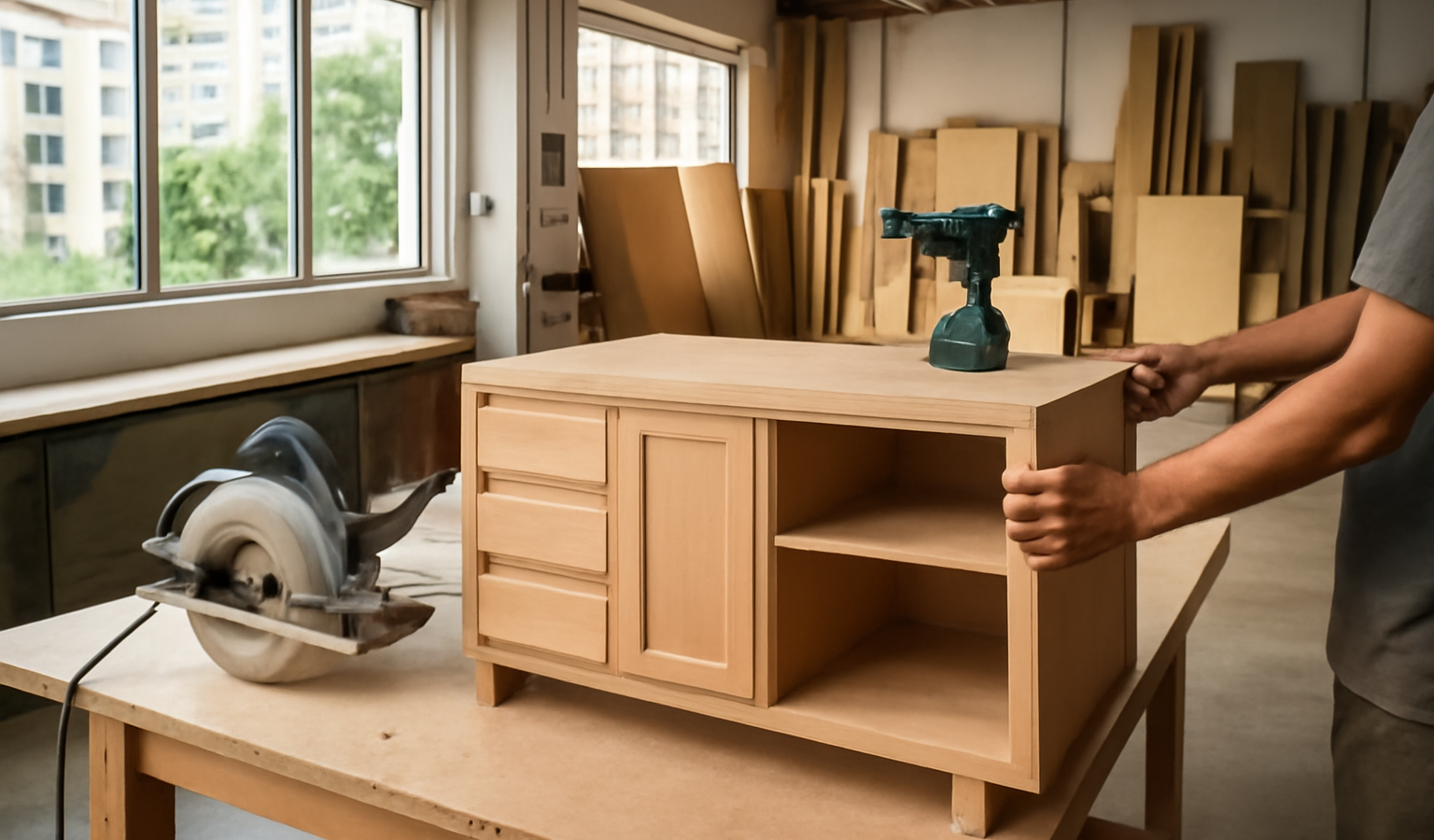
When the renovation quote lands and one number dwarfs the rest, it is almost always the carpentry. Wardrobes, kitchen cabinets, the TV console, the vanity: every one is built to fit your exact walls, and custom work is never cheap. Understanding how it is priced is the difference between a fair quote and a nasty surprise.
Why carpentry is the biggest line item
In most Singapore renovations, built-in carpentry quietly consumes the largest share of the budget, often more than flooring, painting or even the aircon. The reason is simple: these pieces are made to measure. A carpenter builds a carcass sized to your niche, hangs doors cut to your ceiling height and finishes surfaces to your chosen look. There is no economy of scale the way there is with a flat-pack unit off a shelf.
Kitchens and wardrobes are the heaviest hitters because they involve long runs, tall units and, in the kitchen, water and heat resistance on top. It is not unusual for carpentry alone to account for a third or more of a full flat renovation, which is why trimming here moves your total budget more than almost anything else. For how this fits your whole project, see our breakdown of renovation cost by flat type in Singapore.
Understanding the foot run
Carpentry is priced per foot run (sometimes called running foot), which is the horizontal length of a cabinet stretch. A kitchen with a three-metre wall of lower cabinets is roughly ten feet run, and the quote multiplies that length by a per-foot rate.
Two things inflate the per-foot number. The first is height: a full-height wardrobe or tall pantry column costs more per foot than a low console because there is more material and more doors. The second is what goes inside, since drawers, pull-outs and internal fittings cost more than plain shelves. Always ask whether a quote is for base units only or includes the upper cabinets too.
Materials: carcass and boards
The hidden box, the carcass, is where quality either lasts or fails early.
- Plywood — layered timber that holds screws firmly and tolerates moisture. The preferred choice for kitchens, bathroom vanities and anything that must last, and it costs more.
- Particleboard (chipboard) — compressed wood particles, cheaper and fine for dry, light-duty areas, but it swells and loses strength if water gets in.
- MDF — dense and smooth, excellent for painted door fronts and mouldings, but heavy and moisture-sensitive as a carcass.
A common smart split is plywood carcasses in the kitchen and board materials in dry bedroom wardrobes, so you pay for durability only where it earns its keep.
Finishes: doors and countertops
The surfaces you see and touch have their own cost ladder. For door fronts, laminate is the affordable workhorse, coming in countless colours and textures. Spray-painted or PET finishes look sleeker and seamless but cost more and can be harder to touch up.
For countertops, laminate tops are cheapest but wear at edges and around the sink. Solid surface offers a seamless, repairable finish at mid cost. Quartz (engineered stone) is the popular premium pick: hard, heat- and stain-resistant and long-lasting, but the most expensive of the three. In a kitchen that gets daily heavy use, spending up on the countertop usually pays off, while you can save on carcass finishes that nobody sees.
Hardware makes or breaks it
The parts that move are the parts you notice every day. Soft-close hinges and drawer runners stop the slamming and feel reassuringly solid; they are a modest upgrade that meaningfully improves how a kitchen feels for years. Cheap hardware, by contrast, is the first thing to sag, squeak or fail.
Ask your contractor which brand of hinges and runners is quoted, and whether lift-up flap fittings, pull-out baskets or internal organisers are included or extra. This is one area where paying a little more is rarely regretted.
It also pays to ask about the edging on your boards. Cheap edge banding lifts and peels once moisture and daily knocks get to it, especially around the kitchen sink and dishwasher, whereas a properly applied edge keeps the carcass sealed and looking new for years. These small details rarely appear on a quote line, so raise them directly and get the answers in writing.
Custom versus ready-made
Not everything needs to be built on site. Ready-made or modular units can be far cheaper for standard spaces, and they arrive with a fixed price and no measurement risk. Custom carpentry earns its premium where the space is awkward: a sloping corner, a full-height run to the ceiling, or a piece that must integrate seamlessly with surrounding joinery.
A sensible strategy is to mix the two, using ready-made where the layout is regular and reserving bespoke work for the tricky, high-impact areas. If you are also furnishing loose pieces, our guide on where to buy affordable furniture in Singapore pairs well with a leaner carpentry scope.
Rough cost ranges
Prices vary with material, height, finish and contractor. As a rough 2026 guide only, verify current quotes for your layout:
| Item | Rough cost (per foot run) | Notes |
|---|---|---|
| Kitchen cabinets | $150 – $400 | Higher for tall units, quartz tops |
| Wardrobe | $180 – $450 | Full-height and drawers cost more |
| TV console | $120 – $300 | Depends on length and finish |
| Bathroom vanity | $150 – $350 | Plywood carcass recommended |
These are supplied-and-installed guides for typical work; premium finishes and specialist fittings push them higher.
Tips to save without regret
- Limit the run — every extra foot costs money, so plan storage you will actually use.
- Spend where it shows — invest in countertops and hardware, economise on hidden carcasses in dry areas.
- Reface, don’t rebuild — if existing carcasses are sound, new doors and tops can transform them for less.
- Mix in ready-made — reserve custom work for corners and full-height storage.
Get quotes from a few contractors on the same drawings so you compare like for like; our take on interior designer versus contractor can help you decide who to brief. When you read those quotes, look past the headline figure and check what each one actually includes, because a cheaper per-foot rate that quietly uses particleboard where you needed plywood, or basic hinges where you wanted soft-close, is not really cheaper at all. A slightly higher quote that spells out materials, hardware brands and finishes line by line is usually the safer buy, and it makes the carpenter accountable to exactly what you agreed rather than a vague scope you both interpret differently on installation day.
The bottom line
Carpentry dominates the budget because it is custom, and the per-foot-run rate hinges on height, material and finish. Choose plywood and quality hardware where durability matters, save on hidden surfaces and standard spaces, and keep the total run honest to your real storage needs. When you are ready to price your built-ins accurately, get matched with vetted renovation contractors below.
Frequently asked questions
How is carpentry priced in Singapore?
Almost always per foot run, meaning the horizontal length of the cabinet run. As a rough 2026 guide, kitchen cabinets sit around $150 to $400 per foot run and wardrobes around $180 to $450, varying with material, height and finish. Always confirm current quotes.
Is plywood worth paying more for than particleboard?
For wet or heavy-use areas, yes. Plywood holds screws better and tolerates moisture far more than particleboard or MDF, so it is a sensible upgrade for kitchen and bathroom carcasses. In dry, light-use zones, board materials can be acceptable to save cost.
How can I reduce carpentry costs without cutting quality?
Limit the total foot run, keep finishes simple where they are not seen, use ready-made units for standard spaces, and reserve custom carpentry for awkward corners and full-height storage. Reusing sound existing carcasses and refacing doors can also save a lot.
Get renovation quotes
Share your renovation plans and we’ll help you get quotes from interior-design firms. Free, no obligation.
More in Renovation & Services
See all
Budget Interior Design Tips for Your Home (2026)
Budget interior design tips for Singapore homes: where to save or splurge, loose furniture vs carpentry, paint and lighting wins, and phasing…

Home Office Renovation Ideas & Setup (2026)
Home office renovation ideas for Singapore flats: dedicated room or nook, ergonomics, lighting, power and data points, acoustics and smart storage for…

Resale Flat Interior Design Ideas (2026)
Practical resale flat interior design ideas for older HDB homes: when to refresh or hack, handle dated tiles, keep charm and choose…