
Choosing an Office Chair for Working at Home (2026)
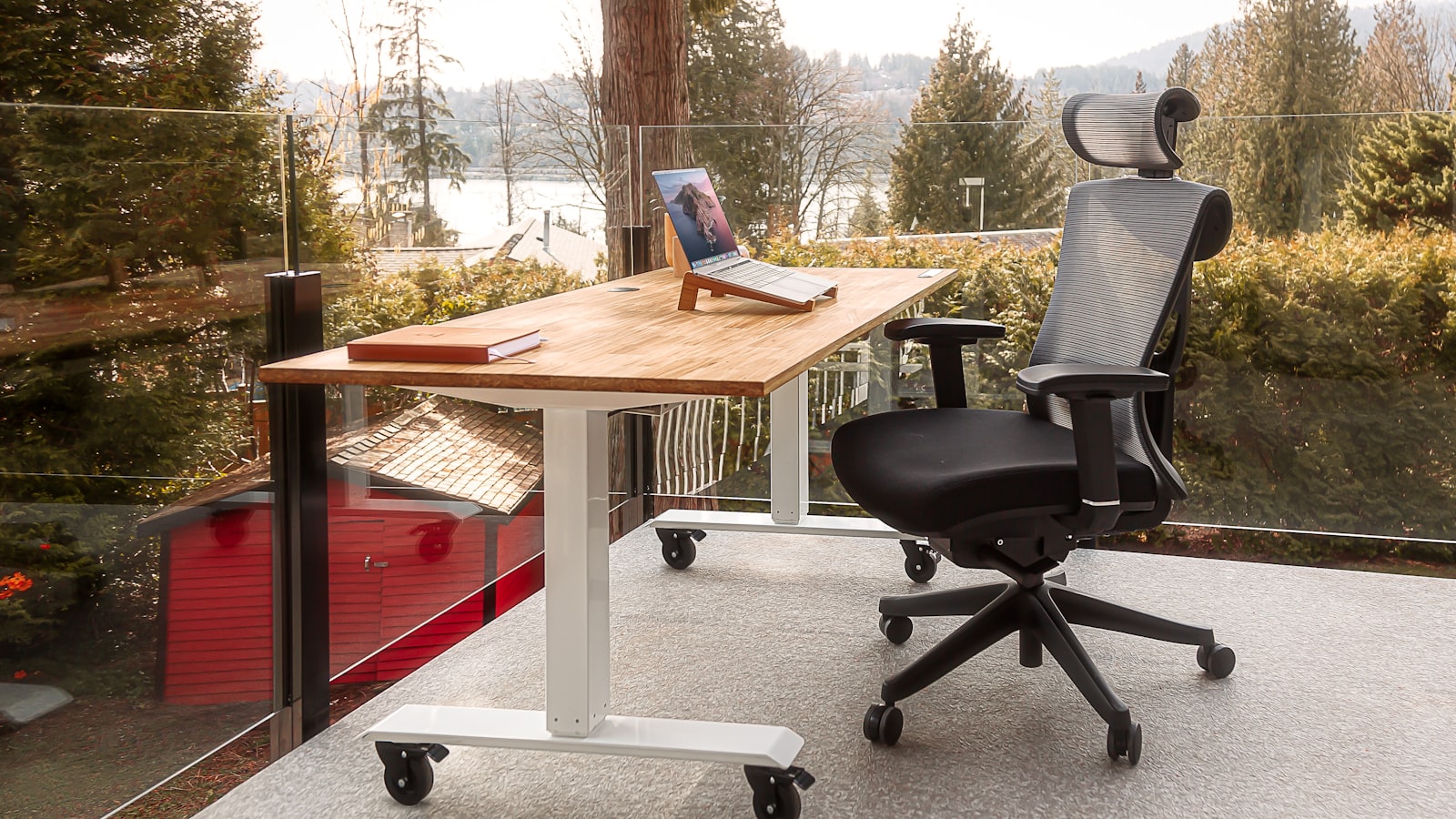
Somewhere around month three of working from home, the dining chair stops being a chair and becomes a diagnosis. The lower back aches by 4pm, one shoulder rides higher than the other, and you’ve built a nest of cushions that never quite works. A proper office chair fixes this — but the category is a swamp of jargon, lookalike models and prices from under a hundred dollars to a few thousand. Here’s how to cut through it.
Why the dining chair hurts
It’s not that dining chairs are badly made — they’re made for a different job. They hold you upright for the length of a meal, with a flat seat, a fixed height and a near-vertical back. Desk work is different: hours of static posture, arms raised to a keyboard, eyes fixed at screen height. On a chair with no lumbar support, your lower spine slowly rounds; with the wrong height, your shoulders shrug or your thighs jam against the desk. None of it hurts on day one. All of it hurts by month six, which is why the chair deserves the same budget seriousness as the desk it sits at — if you’re still assembling the workspace, start with our guide to a work-from-home desk setup in a small flat.
Ergonomic features, in priority order
Marketing pages list adjustments like trophies. Here’s the order that actually matters:
- 1. Seat height range. Non-negotiable. Your feet should sit flat with knees at roughly 90 degrees and elbows level with the desk. Check the stated range fits your height and your desk — shorter users especially should confirm the minimum height.
- 2. Lumbar support. The curve that keeps your lower spine from collapsing into a C-shape. Adjustable-height lumbar support is ideal; a well-shaped fixed curve is acceptable if it lands in the right spot for your back.
- 3. Seat depth. Sitting fully back, you want two to three fingers of gap between the seat edge and the back of your knees. Sliding seat pans let taller and shorter users share a model; a too-deep fixed seat forces you to perch forward, defeating the backrest entirely.
- 4. Adjustable armrests. Height-adjustable at minimum, so your forearms rest lightly while typing. Armrests that are too high shrug your shoulders; too low, and your arms hang. If they clash with your desk height, armrests that lower fully out of the way are the fix.
- 5. Recline and tilt. A backrest that reclines with adjustable tension lets you shift posture through the day, which matters more than any single “perfect” position. Tilt lock at a couple of angles is a bonus.
A chair that gets the first three right beats a chair with ten flimsy levers. Headrests, footrests and 4D armrests are refinements, not foundations.
Mesh vs foam vs leather in this climate
Upholstery choice hits differently in Singapore than in the showroom’s aircon. Mesh backs — and mesh seats, on some designs — let air move through the chair, which is a genuine comfort difference when you’re working through a 32-degree afternoon without the aircon running. Quality mesh is supportive and durable; cheap mesh sags at the edges within a year or two.
Fabric over foam feels plusher initially and suits air-conditioned rooms, but it holds heat and sweat against you over long sessions, and foam compresses permanently over the years. Leather and PU leather look executive and wipe clean, but they’re the hottest option going, and PU coatings are notorious for peeling in tropical humidity after a few years. For most home workers here, mesh-backed chairs are the sensible default, with a foam or mesh seat by preference.
Gas lifts, bases and weight ratings
The unglamorous parts determine how long the chair lasts. The gas lift (the cylinder the seat rides on) is graded by class — higher classes are built and tested to stricter standards, and better chairs typically specify class 3 or 4 cylinders. A chair that slowly sinks during the day has a failing lift; on cheap chairs it’s often not worth replacing.
Check the stated weight rating against the heaviest user, with margin — ratings are maximums, not comfort targets. Look at the base material too: aluminium and quality reinforced nylon bases outlast brittle plastic ones. Give the castors a look as well; soft-wheel castors suit hard flooring, and hard wheels want carpet.
Your floor will notice
Most Singapore homes have tile, vinyl or laminate underfoot, and years of rolling castors will scuff and dull a patch of any of them — a real issue in a rental where the floor’s condition affects your deposit. A chair mat or a low-pile rug under the chair zone is cheap insurance, and soft polyurethane castors (often sold as rollerblade-style wheels) are a small upgrade that’s kinder to hard floors and quieter for the neighbours below.
Try before you buy, even if you buy online
Chairs are intensely personal — a model that’s perfect for a 1.85 m broad-shouldered user can be actively wrong for someone 1.55 m. Sit in the actual model for ten minutes if you possibly can: showrooms, a friend’s chair, or the office you occasionally visit. Check that the lumbar curve lands on your lower back, the seat depth clears your knees, and the armrests meet your desk height. If you must buy unseen, confirm the returns policy before paying, and read reviews from users of your own build rather than the average score.
Budget tiers, as a rough guide
Prices move around, but as a rough 2026 guide: entry-level task chairs ($100–$250) get you basic height adjustment and modest padding — fine for a few hours a week, marginal for full-time. Mid-range ergonomic chairs ($250–$700) add proper lumbar support, seat-depth adjustment and better cylinders and mesh; this is the sweet spot for most full-time home workers. Premium ergonomic chairs ($700–$1,800 and beyond) buy refined mechanisms, long warranties and durability measured in decades. Treat these as ballparks and verify current prices. And keep the chair in proportion to the rest of the room — if you’re kitting out a whole workspace, our furniture and homeware guides and this piece on choosing a study desk that lasts cover the other half of the equation.
The refurbished and ex-office route
Here’s the quiet bargain of this category: offices downsize, and their chairs — often premium ergonomic models built for a decade of eight-hour shifts — flood the second-hand market at a fraction of retail. A refurbished premium chair at mid-range money is frequently a better buy than a new mid-range chair. Inspect before paying: the lift must hold, the recline must lock, mesh must be taut and the base uncracked. Our guide to what’s worth buying used in Singapore puts office chairs near the top of the list.
On warranty: new premium chairs often carry warranties of ten years or more, mid-range models a few years, and used chairs usually none — price that risk in. A long warranty on the mechanism and cylinder specifically is worth more than one that only covers the fabric.
The bottom line
Choose in this order: confirm the seat height range fits you and your desk, insist on real lumbar support and sensible seat depth, prefer mesh for the climate, and check the cylinder, base and weight rating for longevity. Try the chair with your own back if you can. Spend at mid-range level if you work from home full-time — or beat the system with a refurbished ex-office chair — and your spine will repay the decision every working day for the next decade.
Frequently asked questions
Why does my back hurt after working from home on a dining chair?
Dining chairs are built for an hour of sitting upright at a meal, not eight hours of desk work. They have no lumbar support, a fixed height that rarely matches your desk, and a flat seat that loads your tailbone. Over months this shows up as lower back and neck strain.
Is a mesh office chair better for Singapore's climate?
For most people, yes. Mesh lets air circulate through the backrest and seat, which matters when you're working without aircon in 30-plus degree humidity. Foam and leather chairs feel plush but trap heat against your body over long sessions.
How much should I spend on a home office chair?
As a rough 2026 guide: basic task chairs run about $100–$250, solid mid-range ergonomic chairs about $250–$700, and premium ergonomic chairs $700–$1,800 or more. Buying refurbished ex-office stock can get mid-range quality at entry-level money.
What should I check when buying a used office chair?
Sit in it: the gas lift should hold height without sinking, the recline should lock firmly, and the base and castors should show no cracks. Check the mesh for sagging or fraying at the edges — replacement parts for generic chairs are hard to source.
More in Furniture & Homeware
See all
Storage Ottomans & Benches: A Buying Guide
A storage ottoman or bench adds hidden storage and seating in small SG flats. Our buying guide covers types, sizes, materials, lids…

How to Measure for Curtains (2026)
How to measure curtains for Singapore homes: rod and track width, drop options, fullness ratio and day-and-night layering, all in cm and…

How to Measure a Room for Furniture (2026)
Learn how to measure a room for furniture step by step: length, width, doorways, delivery access, power points and walkways, plus a…