
HDB Renovation Timeline 2026: What to Expect Week by Week
Renovation timelines slip for a predictable reason: nobody told you the order things have to happen in. You can’t tile before the waterproofing cures, you can’t install carpentry before the walls are painted, and you can’t do any of it before HDB approves your permit. Once you understand the sequence, the whole thing stops feeling like a black box and starts looking like a schedule you can actually hold your contractor to. Here’s a realistic week-by-week view of a full HDB renovation, which typically runs about six to ten weeks.
Before week one: planning, quotes and permits
The clock people quote you usually starts on site, but the real timeline begins weeks earlier. You need to settle your design, choose materials, get three comparable quotes and appoint a contractor. Only an HDB-registered renovation contractor under the RCMP scheme can carry out your works, so confirm registration before signing anything. If you haven’t shortlisted anyone yet, our guide on how to choose a renovation contractor covers the checks that save you grief later.
Once appointed, your contractor applies for the HDB renovation permit. Many works require one, and hacking of structural walls is never permitted. Permit approval takes time, so don’t book a hacking crew before it’s granted. Treat this as a genuine part of the timeline, not an afterthought.
Week 1: hacking and demolition
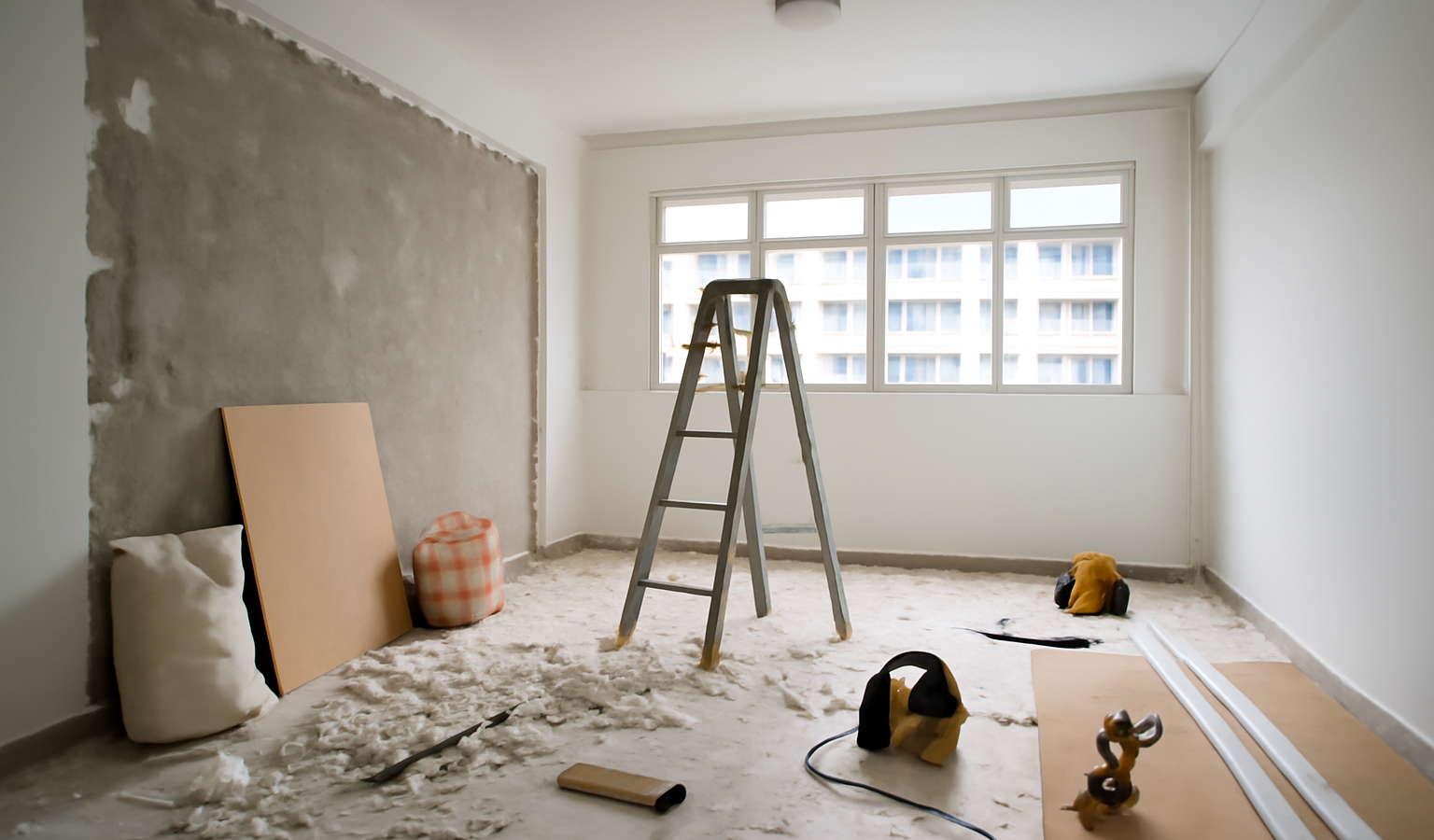
With the permit approved, physical work begins. The team removes what’s leaving: old tiles, existing cabinets, walls marked for removal (non-structural only), and dated fittings. This is the loudest, dustiest stage. Because HDB restricts noisy and hacking works to weekday daytime hours, generally around 9am to 6pm on weekdays with no hacking on Sundays or public holidays, you can’t buy speed by working weekends. Expect debris removal to eat a day or two on its own, and warn your neighbours in advance to keep relations civil.
Weeks 2 to 3: masonry, wet works and waterproofing
Next comes the wet, messy building work: brickwork for any new walls, screeding, plastering, and crucially, waterproofing in the bathrooms and kitchen. Waterproofing membrane must be applied and allowed to cure before tiling goes over it. This is the stage people most want to rush, and the stage where rushing causes the most expensive failures, because a leak that surfaces months later means hacking finished tiles to redo it.
Insist on a proper waterproofing warranty for wet areas and don’t let anyone tile over membrane that hasn’t cured. Tiling of floors and walls follows once surfaces are ready. If your kitchen is a major part of the job, our kitchen renovation cost guide explains where the money and time actually go.
Weeks 3 to 4: plumbing and electrical
Plumbing and electrical work is threaded through the wet-works and finishing stages. New water points, waste pipes, power sockets, lighting points and data runs are positioned according to your layout, which is why finalising where your fridge, hob and sockets go early matters so much. Moving a socket after the wall is closed is slow and costly.
By law, electrical work of any real scope must be done by a licensed electrical worker, and gas and certain plumbing works need appropriately qualified tradespeople. Don’t let a general handyman certify your wiring. For a sense of what these trades charge and where licensing is non-negotiable, see our guide to electrician, plumber and handyman costs in Singapore.
Weeks 4 to 6: carpentry and built-ins
Carpentry is usually the longest single lead time in the whole project, because wardrobes, kitchen cabinets, countertops and feature panels are fabricated to your measurements off-site. If your contractor didn’t order early, this is where the schedule stalls while everything else waits. Once fabricated, installation itself is relatively quick, but the fabrication window is what stretches a timeline. Ask when carpentry was ordered, not just when it will be installed.
Countertops in particular often need a site measurement after cabinets are fitted, then fabrication, then installation, adding an extra loop. Plan for it rather than being surprised by it.
Weeks 6 to 7: painting, then final fittings
Painting typically happens after the messy trades are done but is sometimes split, with a first coat earlier and final coats near the end so scuffs from installation get covered. After paint, the finishing fittings go in: sanitary ware, taps, light fixtures, switches, door handles, and any loose furniture or appliances you’re coordinating. Aircon installation is usually slotted in around here too, and if you’re still deciding on units, our guide to buying aircon for an HDB flat is worth a look before the installer arrives.
Final week: defects, touch-ups and cleaning
No renovation finishes perfectly on the first pass. Walk the flat with your contractor and list every defect: uneven grout lines, paint touch-ups, a drawer that doesn’t close flush, a chipped tile. A good contractor expects this snagging list and works through it. Only after touch-ups is a proper post-renovation clean worthwhile, since sanding and touch-up paint create fresh dust. Then you get your keys back to a finished home. For the full picture across every stage, browse our renovation guides.
How scope changes the timeline
The six-to-ten-week figure is for a fairly full renovation. Your actual timeline scales with scope, so it helps to know where yours sits. A light cosmetic refresh, repainting, changing a few fittings, adding some carpentry without hacking, can be done in as little as two to four weeks because it skips the slowest stages entirely. A moderate job that retouches the kitchen and one bathroom, adds built-ins and reworks some electrical, lands in the middle of the range. A full gut renovation with extensive hacking, both bathrooms redone, a reconfigured kitchen and wall-to-wall carpentry is where you reach and sometimes exceed the ten-week mark.
Two variables stretch any of these: material lead times and the number of trades that have to queue behind each other. A specialised imported tile or a made-to-order countertop can add a week on its own if ordered late. Sequencing matters too, because each trade often can’t start until the previous one finishes, so a single slipped stage pushes everything behind it. This is exactly why locking your material choices before work begins protects your dates more than any amount of chasing on site, and why a light refresh finishes so much faster than a full gut job.
Why it slips, and how to protect your dates
Most delays trace back to a handful of causes: late material selection, carpentry ordered too late, waterproofing rushed and redone, or design changes mid-project. Lock your materials and layout before hacking starts, resist changing your mind once trades are sequenced, and hold your contractor to a written schedule with stage milestones. Building in a buffer of a week or two is realistic, not pessimistic.
The bottom line
A full HDB renovation runs roughly six to ten weeks when it goes well, and the sequence is fixed: permit, hacking, wet works and waterproofing, plumbing and electrical, carpentry, painting, then defects and cleaning. The two stages that most often blow the schedule are waterproofing (which can’t be rushed) and carpentry (which must be ordered early). Use an HDB-registered contractor, respect the permit and noise rules, and hold everyone to a written timeline. Tell us your flat and scope and get matched with vetted renovation contractors below.
Frequently asked questions
How long does an HDB renovation take?
A full renovation of an HDB flat usually takes around 6 to 10 weeks. Cosmetic jobs are faster; extensive hacking, custom carpentry and material delays push it longer.
Do I need a permit before renovation starts?
Yes, many HDB renovation works require a permit, and your registered contractor applies for it. Hacking and other permitted works should not begin until approval is granted.
What are the HDB renovation noise rules?
Noisy renovation and hacking works are generally allowed only on weekdays, roughly 9am to 6pm, with no hacking on Sundays and public holidays. Check the current HDB rules before scheduling.
Which stage takes the longest?
Carpentry usually has the longest lead time because built-in wardrobes, kitchen cabinets and countertops are fabricated to measure. Order early to avoid holding up the whole schedule.
Get renovation quotes
Share your renovation plans and we’ll help you get quotes from interior-design firms. Free, no obligation.
More in Renovation & Services
See all
Budget Interior Design Tips for Your Home (2026)
Budget interior design tips for Singapore homes: where to save or splurge, loose furniture vs carpentry, paint and lighting wins, and phasing…

Home Office Renovation Ideas & Setup (2026)
Home office renovation ideas for Singapore flats: dedicated room or nook, ergonomics, lighting, power and data points, acoustics and smart storage for…

Resale Flat Interior Design Ideas (2026)
Practical resale flat interior design ideas for older HDB homes: when to refresh or hack, handle dated tiles, keep charm and choose…