
HDB Toilet Renovation: Costs & What’s Involved (2026)
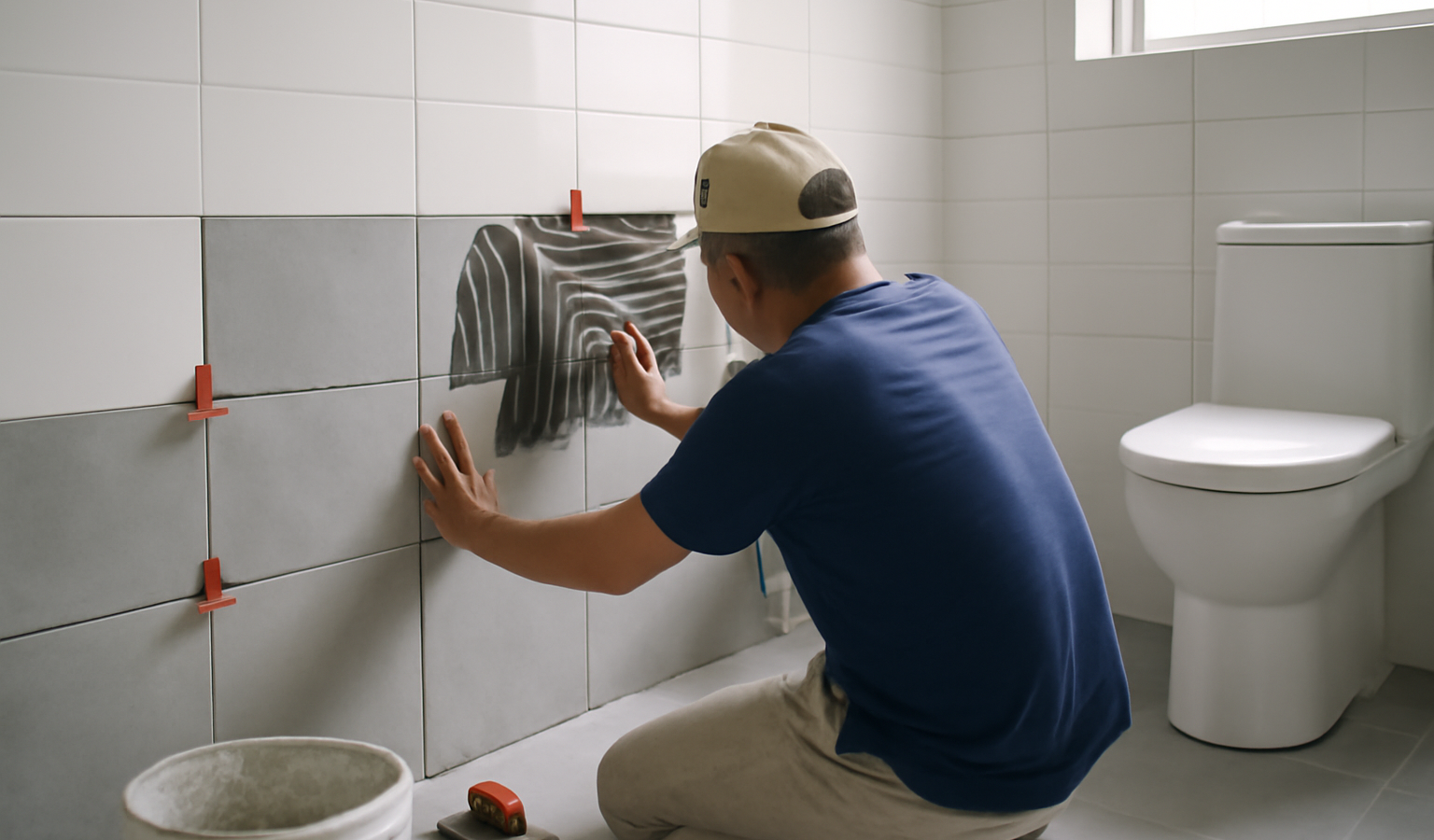
The bathroom is usually the most expensive room per square foot in any renovation — and in an HDB flat it’s also the most regulated. Between waterproofing rules, hacking permits and the question of whether to overlay or retile, a small space generates a surprising number of decisions. Here’s what an HDB toilet renovation actually involves, what drives the price, and where you can sensibly save.
What a full toilet renovation covers
A typical full scope runs like this: hacking off the old wall and floor tiles, re-screeding the floor, applying a new waterproofing membrane, tiling the walls and floor, then installing the plumbing and sanitary ware — toilet bowl, basin, taps, shower set — followed by a vanity cabinet, mirror, lighting, and accessories like towel rails and shower screens.
Each of those is a separate trade and a separate line on your quote. That’s worth knowing, because contractors package them differently: one quote might include sanitary ware and another might assume you’re supplying your own. Always compare quotes item by item, not by the bottom-line number.
Overlay vs hack-and-retile
The biggest fork in the road is whether to hack the existing tiles or overlay new finishes on top of them.
- Overlay means laying new tiles directly over the existing ones (or using large-format panels). It’s cheaper, faster and much less dusty, and it avoids disturbing the existing waterproofing. The trade-offs: the floor level rises slightly, door clearances may need adjusting, and you’re building on top of whatever condition the old surface is in.
- Hack-and-retile strips everything back to the concrete. It costs more and takes longer, but it lets you redo the waterproofing from scratch, correct the floor fall towards the drain, and start with a clean, flat base. If your bathroom has leaks, hollow-sounding tiles or drainage problems, this is the honest fix.
For older resale flats where the bathroom hasn’t been touched in 20 years, hack-and-retile is usually money well spent. For a relatively young flat with sound surfaces, an overlay can look just as good for a fraction of the cost.
Permits and the rules that apply
HDB requires a renovation permit for works like hacking wall or floor finishes, replacing bathroom tiles, and relocating plumbing or sanitary fittings. The work must be carried out by a contractor registered under HDB’s Registered Renovation Contractors’ Scheme (RRC), and your contractor normally applies for the permit on your behalf before starting. Read our HDB renovation permit guide for the full picture of what needs approval.
Two other rules catch people out. First, new BTO flats carry a 3-year restriction on hacking bathroom wall and floor finishes, because hacking voids the waterproofing warranty on the flat. During that window you’re limited to overlays and surface treatments. Second, noisy works like hacking and drilling are restricted to weekday daytime hours, with no renovation works allowed on Sundays and public holidays — confirm the current permitted hours with HDB or your contractor when planning your timeline.
Waterproofing: the part you can’t skimp on
When floor finishes are hacked, a new waterproofing membrane must be applied before tiling, extending partway up the walls, and it needs time to cure properly before anything goes on top. This is the least visible part of the job and the most consequential: a failed membrane means water seeping into the ceiling of the flat below, a dispute with your neighbour, and hacking everything up again to fix it.
Ask your contractor what membrane system they use, how long they allow for curing, and whether they do a flood test before tiling. A day or two of “nothing visibly happening” on site here is a good sign, not a delay. We cover the details in our guide to bathroom waterproofing basics.
Plumbing, sanitary ware and fittings
Keeping the toilet bowl, basin and shower in their existing positions keeps plumbing costs down. Relocating them means running new pipes, possibly boxing them up, and more approval paperwork — doable, but it adds meaningfully to the bill in a small room.
On fittings, the price spread is enormous: a basic but perfectly serviceable toilet bowl, basin and tap set costs a few hundred dollars, while designer equivalents run into the thousands. A sensible rule for a typical HDB budget: spend on the things you touch daily (tap, shower mixer, toilet seat quality) and save on the things you don’t (the basin itself, accessories). A simple wall-hung vanity in a moisture-resistant material adds storage without eating floor space.
What it roughly costs in 2026
Every bathroom is different, so treat these strictly as a rough guide and verify with current quotes:
- Overlay refresh — new floor and wall finishes over existing tiles, new basic sanitary ware and accessories: often in the low thousands per bathroom.
- Full hack-and-retile — hacking, waterproofing, tiling, mid-range sanitary ware, vanity and shower screen: commonly somewhere in the mid to high single-digit thousands per bathroom, and beyond that with premium tiles or fittings.
Tile choice moves the number a lot — large-format or imported tiles cost more both to buy and to lay. So does anything custom, like niches cut into walls or frameless glass. For how bathroom costs sit within a whole-flat budget, see our breakdown of renovation costs by flat type and our deeper dive into bathroom renovation costs and waterproofing.
Timeline: what to expect
An overlay job on one bathroom can wrap up in under a week. A full hack-and-retile usually runs around one and a half to three weeks per bathroom: a couple of days for hacking and haulage, several days for screeding, waterproofing and curing, then tiling, grouting, plumbing installation and fittings. If you’re doing both bathrooms in a flat you’re living in, stagger them so you always have one working toilet — it’s a small scheduling request that makes a big difference to your sanity.
Where to save and where to spend
Save on: tile size and origin (local-stock standard formats are far cheaper), accessories, and the vanity (a simple carpentered or off-the-shelf unit does the job). Spend on: waterproofing workmanship, a good tiler (uneven falls and lippage are forever), decent tap and mixer internals, and proper ventilation. Skipping the shower screen to save money is a false economy in a wet-and-dry layout — water everywhere shortens the life of everything else.
The bottom line
An HDB toilet renovation is a small space with big consequences: get the waterproofing, drainage falls and permits right and everything else is cosmetic. Overlay if your existing surfaces are sound and you’re watching the budget; hack and retile if the bathroom is old, leaky or you want the layout corrected — and remember the 3-year no-hacking rule if your BTO is new. Get at least three itemised quotes from HDB-registered contractors so you’re comparing like with like. Explore more guides in our renovation and services hub — and when you’re ready for quotes, get matched with renovation contractors below.
Frequently asked questions
Do I need an HDB permit to renovate my toilet?
You need a permit if the work involves hacking wall or floor finishes, replacing tiles, or relocating plumbing and sanitary fittings. Simple swaps like changing a tap, toilet bowl or vanity on existing points generally don't need one, but your HDB-registered contractor should confirm and apply on your behalf.
Can I hack the bathroom tiles in my new BTO flat?
Not immediately. HDB restricts hacking of bathroom wall and floor finishes for the first 3 years in new BTO flats because it voids the waterproofing warranty. Overlaying tiles or using vinyl-style wall coverings are the usual workarounds during that window.
How long does an HDB toilet renovation take?
A straightforward overlay job can be done in under a week. A full hack-and-retile typically takes around 1.5 to 3 weeks per bathroom once you account for hacking, waterproofing membrane curing, tiling, plumbing and fitting installation.
Is overlaying tiles as good as hacking and retiling?
It's cheaper and faster, and fine when the existing waterproofing and drainage are sound. But it raises the floor level slightly, can trap problems underneath, and isn't suitable if there are existing leaks or hollow, cracked tiles.
How much does an HDB toilet renovation cost?
As a rough guide, an overlay refresh is often in the low thousands per bathroom, while a full hack-and-retile commonly runs somewhere in the mid to high single-digit thousands, and beyond with premium tiles or fittings. Verify current quotes and compare item by item.
Should I move the toilet bowl in an HDB bathroom renovation?
Keeping the toilet bowl, basin and shower where they are keeps plumbing costs down. Relocating them means running new pipes, possibly boxing them up, and more approval paperwork, which adds meaningfully to the bill in a small room.
Which bathroom fittings are worth spending on in an HDB renovation?
Spend on things you touch daily, such as the tap, shower mixer and toilet seat quality, and save on things you do not, like the basin itself and accessories. A basic toilet bowl, basin and tap set costs a few hundred dollars, while designer equivalents run into the thousands.
Can I renovate both bathrooms in my HDB flat at the same time?
It is better to stagger them if you live in the flat, so you always have one working toilet. A full hack-and-retile usually runs around one and a half to three weeks per bathroom.
Get renovation quotes
Share your renovation plans and we’ll help you get quotes from interior-design firms. Free, no obligation.
More in Renovation & Services
See all
Budget Interior Design Tips for Your Home (2026)
Budget interior design tips for Singapore homes: where to save or splurge, loose furniture vs carpentry, paint and lighting wins, and phasing…

Home Office Renovation Ideas & Setup (2026)
Home office renovation ideas for Singapore flats: dedicated room or nook, ergonomics, lighting, power and data points, acoustics and smart storage for…

Resale Flat Interior Design Ideas (2026)
Practical resale flat interior design ideas for older HDB homes: when to refresh or hack, handle dated tiles, keep charm and choose…