
How Long Do Home Appliances Last? (Replace or Repair)
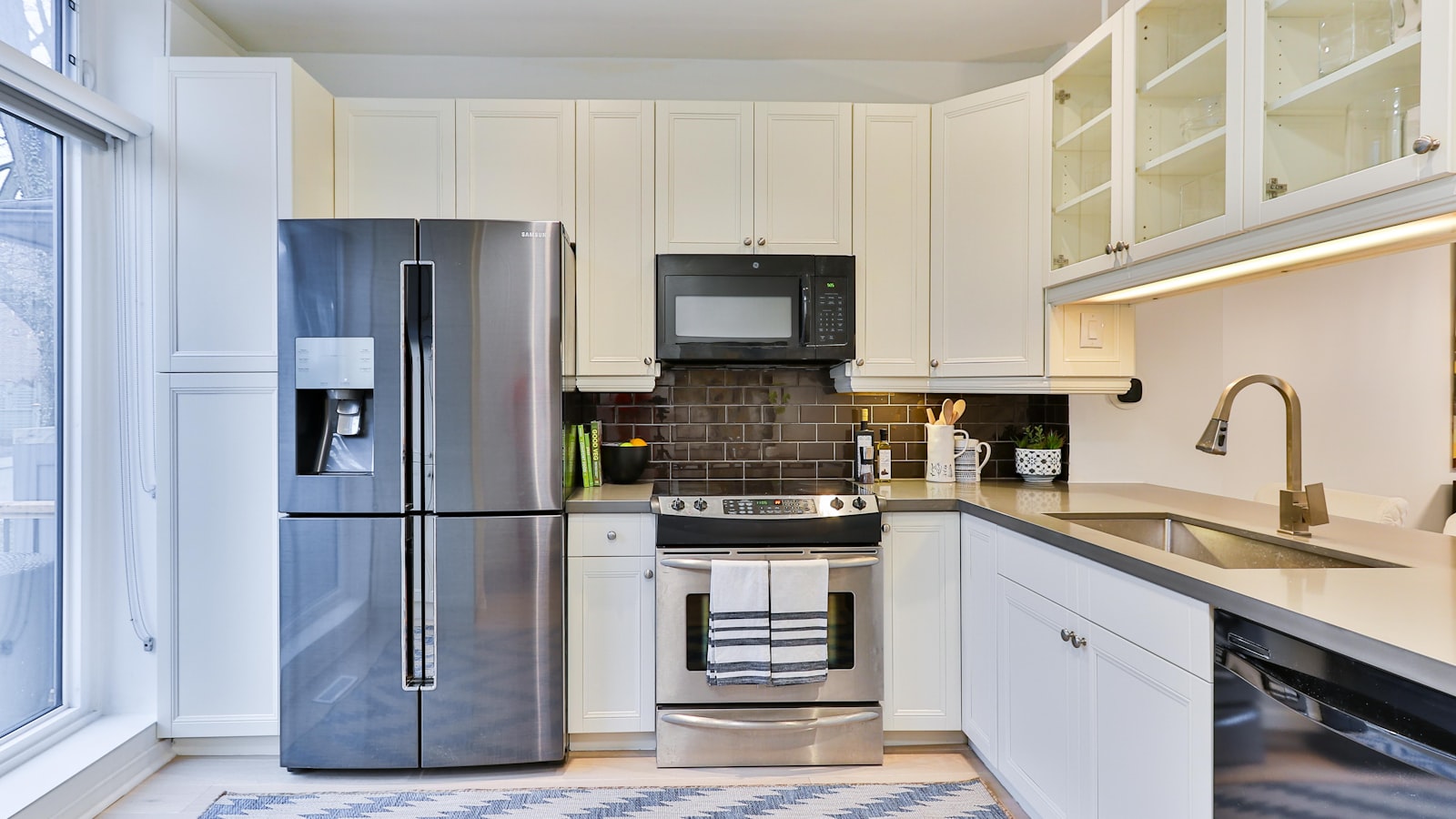
Every appliance in your flat is quietly counting down. The fridge that hums a little louder each year, the washing machine that walks across the service yard on spin, the aircon that never quite gets cold — at some point each one forces the same question: fix it or bin it? Knowing the typical lifespan of each appliance, and having a simple rule for the repair-versus-replace decision, saves you from paying twice: once for a repair, then again for the replacement six months later.
Typical appliance lifespans at a glance
These are broad ranges, not guarantees — usage habits, build quality and maintenance move the needle a lot. But as a planning guide for a Singapore home, they hold up well:
| Appliance | Typical lifespan | Notes for SG homes |
|---|---|---|
| Refrigerator | 10–15 years | Runs 24/7 against tropical heat; efficiency fades before it fails |
| Washing machine | 8–12 years | Front loaders often outlast top loaders with care |
| Air conditioner | 7–12 years | Heavy nightly use and skipped servicing shorten this fast |
| Storage water heater | 6–10 years | Instant heaters often manage 5–8 years |
| TV | 7–10 years | Panels dim gradually; failure is often the power board |
| Microwave | 7–10 years | Magnetron wear shows as weak, uneven heating |
| Kettle | 3–5 years | Cheap to replace; limescale and element wear are the usual killers |
| Rice cooker | 5–8 years | Non-stick pot coating usually gives out before the electronics |
Notice the pattern: anything with a compressor or motor sits in roughly the 8-to-15-year band, while small heating appliances turn over faster.
Why appliances age faster in Singapore
Manufacturers’ lifespan claims are often based on temperate-climate testing. Singapore is harder on machines in three specific ways.
Constant heat and humidity. A fridge or aircon compressor works against a 30-plus-degree ambient temperature all year, with no winter break. Humidity also corrodes contacts, rusts washing machine drums and encourages mould in seals and drain lines.
Heavy duty cycles. Aircon units that run eight hours a night, every night, clock far more compressor hours than the same unit in a four-month summer climate. If your bedroom units run nightly, budget for the shorter end of the lifespan range and keep up regular servicing — our guide to aircon servicing costs in Singapore covers what maintenance should cost and how often it is worth doing.
Hard use of water heaters and kettles. Singapore’s water is soft by international standards, so scale builds slower than in many countries, but heating elements still degrade with daily use, and storage heater tanks corrode from the inside over the years.
Signs an appliance is on the way out
Most appliances telegraph their decline before they die. Watch for these:
- Fridge: the compressor runs almost nonstop, the cabinet sweats, food spoils faster, or the freezer ices up repeatedly after defrosting.
- Washing machine: loud grinding on spin (often a drum bearing), leaks from underneath, or repeated mid-cycle error stops.
- Aircon: weak cooling even after a chemical wash, water dripping from the indoor unit repeatedly, or the compressor short-cycling on and off.
- Water heater: rust-tinted water, lukewarm output, or tripping the breaker — treat electrical tripping as urgent, not optional.
- TV and microwave: intermittent power, lines or dark patches on the panel, or food heating noticeably slower than it used to.
One warning sign worth acting on immediately: any appliance that trips your circuit breaker, gives off a burning smell, or has a scorched plug should come off the power point until it is checked. In an older flat, recurring trips can also point to wiring issues rather than the appliance itself.
The 50% rule: a repair-or-replace heuristic
When you have a repair quote in hand, use this rule of thumb: if the repair costs more than about half the price of a comparable new unit, and the appliance is past the midpoint of its expected lifespan, replace it.
The logic is simple. A washing machine at year nine with a failed motor might need a repair costing a few hundred dollars, while an equivalent new machine might cost, as a rough guide, somewhere in the range of $400 to $800 in 2026 — verify current prices before deciding. Even a successful repair buys you time on a machine whose other components are equally aged. You are paying half-price for a fraction of the remaining life.
Flip the rule around for young appliances: a three-year-old fridge with a failed thermostat is almost always worth fixing, because you are protecting ten-plus years of remaining service. Check the warranty first, too — compressors on fridges and aircon units often carry longer separate warranties (commonly five to ten years) than the general one-to-two-year cover on the rest of the unit.
Where replacement usually wins even without a breakdown
Sometimes replacing a working appliance is the rational move, because running costs quietly outgrow the purchase price. Fridges and aircon units are the classic cases: they are the biggest energy consumers in most flats, and efficiency has improved substantially over the past decade. An old two-tick fridge can cost meaningfully more per year to run than a new five-tick model under NEA’s Mandatory Energy Labelling Scheme — the gap compounds every year you keep it.
Before deciding, it helps to know what each machine actually costs you monthly; see our breakdown of appliance running costs in Singapore for realistic figures. As a rough guide, when an aging fridge or aircon is both inefficient and past year ten, the energy savings from a high-tick replacement can offset a chunk of the purchase price over its lifetime.
How to stretch appliance lifespan
You cannot make a kettle immortal, but basic habits add years to the big-ticket items:
- Service aircon units regularly — clogged filters and coils force the compressor to work harder and die younger.
- Leave breathing space around the fridge so the condenser coils can shed heat, and check that door seals still grip a piece of paper firmly.
- Don’t overload the washing machine, clean the lint and pump filters, and leave the door ajar between washes so the drum and seal dry out.
- Flush or service storage water heaters occasionally, and replace the sacrificial anode if a technician recommends it.
- Use surge protection for TVs and electronics, and switch appliances off at the wall during lightning-heavy weather if your block has had surge issues.
Getting rid of the old one
Disposal is easier in Singapore than most people expect. If you live in an HDB flat, your town council offers a bulky item removal service — typically a small number of free removals per household per month, booked through the town council, with details varying by estate. Condo residents should check with their management office, which usually designates a bulky waste holding area.
Large appliances such as fridges, washing machines, TVs and aircon units are regulated e-waste, so they can also go through the national e-waste collection scheme: retailers above a certain size must offer one-for-one takeback when they deliver your replacement, and there are e-waste collection points and scheduled collection drives around the island. Smaller items like kettles and microwaves fit the e-waste bins found at many malls and community centres. And if the appliance still works, selling or giving it away beats binning it — our guide on where to sell used electronics in Singapore covers your options.
The bottom line
Expect roughly 10–15 years from a fridge, 8–12 from a washing machine, 7–12 from aircon, and less from water heaters, microwaves and kettles — with Singapore’s heat and heavy usage pushing most machines toward the shorter end. When something fails, apply the 50% rule: cheap fix on a young appliance, repair; expensive fix on an old one, replace — and factor energy efficiency into the maths for fridges and aircon. For more buying guides and honest comparisons across every machine in your home, browse our appliances and electronics guides.
Frequently asked questions
How long does a fridge last in Singapore?
A fridge typically runs 10 to 15 years. Because it works nonstop against tropical ambient heat, expect efficiency to drop in its later years — an old fridge often costs noticeably more to run than a new high-tick model.
Is it worth repairing a 10-year-old washing machine?
Usually not. At 10 years a washing machine is near the end of its typical 8-to-12-year life, and a major repair like a drum bearing or motor often costs a large share of a new machine's price. Small fixes like a door seal or hose can still be worthwhile.
What is the 50% rule for appliances?
It is a rule of thumb, not a law: if the repair quote exceeds roughly 50% of the cost of a comparable new appliance — especially once the unit is past half its expected lifespan — replacing is usually the better-value choice.
How do I dispose of an old appliance in Singapore?
HDB residents can book their town council's bulky item removal service. Regulated e-waste like TVs, fridges and washing machines can also go through the national e-waste collection scheme, and many retailers offer one-for-one takeback on delivery of a replacement.
More in Appliances & Electronics
See all
What Size TV for Your Bedroom? A Simple Guide
What TV size for your bedroom? Our Singapore guide matches screen inches to viewing distance, factoring in 4K, HDB bedroom sizes, wall…

Washing Machine Capacity: What kg Size Do You Need?
Confused by washing machine capacity? Our guide maps kg drum size to household size in Singapore, so you buy the right washer…

Standing Fan Not Working? How to Fix It (2026)
Standing fan not working — dead, spinning slowly, humming or not oscillating? Unplug first, then work through the safe DIY checks before…