
How to Choose a Wardrobe for Your Bedroom (2026)
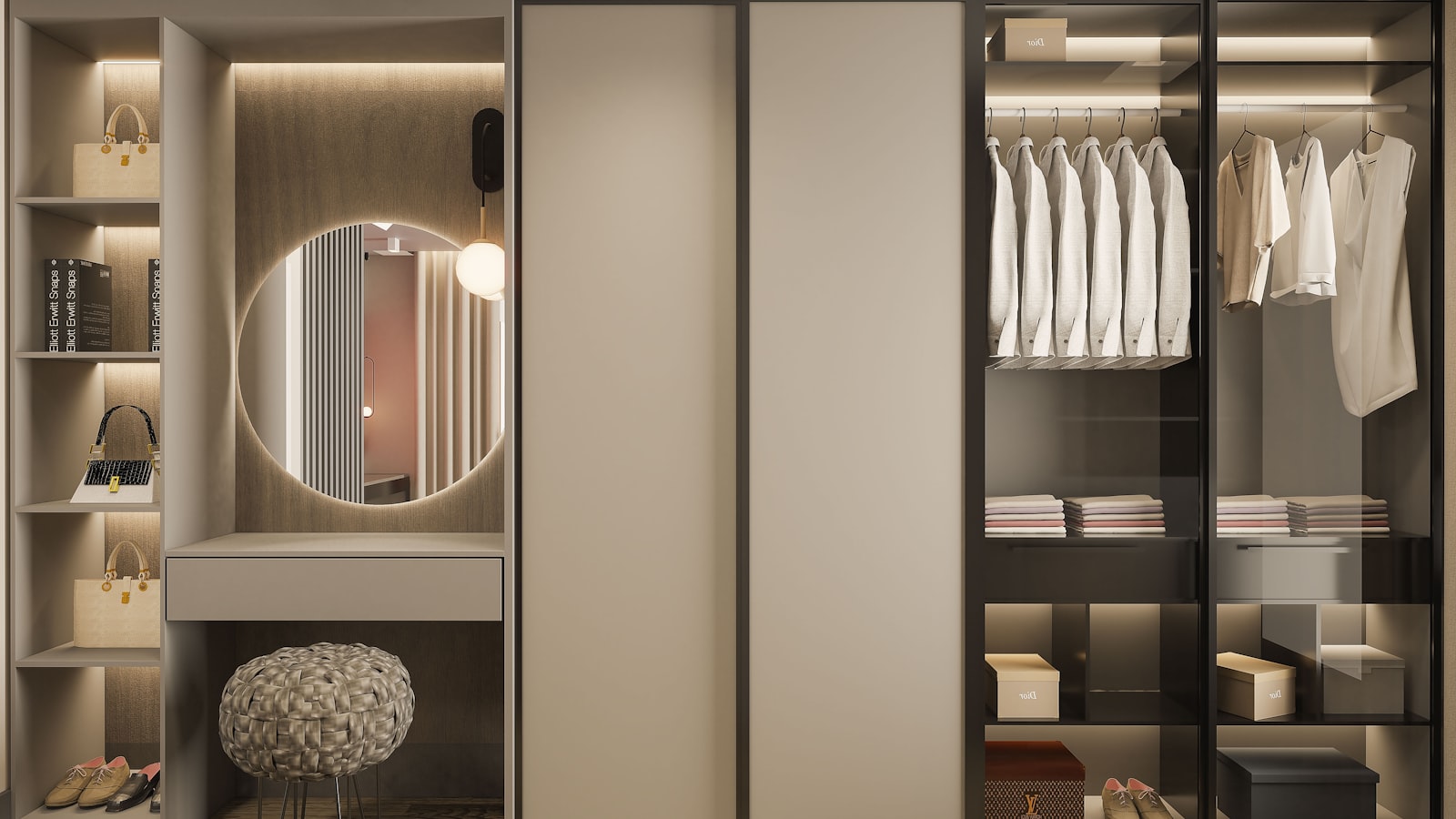
A wardrobe is one of the few pieces of furniture you interact with every single day, and in a Singapore bedroom it also has to fight humidity and tight square footage. Get it right and it quietly organises your life; get it wrong and you have a bulky box that swallows floor space and breeds mould. This guide walks through how to choose a wardrobe, from built-in versus freestanding to doors, sizing and materials suited to our climate.
Built-in versus freestanding
The first big decision is whether to build in or buy freestanding. Built-in wardrobes are custom carpentry fitted to your wall, floor to ceiling, making the most of every centimetre and giving a seamless, tailored look. The trade-off is cost and permanence: they are pricier and they stay with the flat when you leave.
Freestanding wardrobes are ready-made units you buy and assemble. They cost less, install fast, and move with you, which makes them ideal for renters or anyone who likes to rearrange. The compromise is a slightly less efficient fit and a more furniture-like presence in the room. Our guide on where to buy affordable furniture in Singapore is a good starting point if you lean freestanding.
Sliding versus hinged doors
Door type matters more than people expect, especially in small rooms. Sliding doors glide along a track and do not swing outward, so they need no clearance in front, a real advantage when a bed sits close to the wardrobe. The catch is that you can only ever see and reach half the wardrobe at a time.
Hinged doors swing open to reveal the whole interior at once and usually cost less, but they need free space in front to open fully. As a rule, choose sliding doors for tight bedrooms where floor space is precious, and hinged doors for larger rooms where full access and lower cost win out.
Measuring your space properly
Nothing derails a wardrobe purchase faster than bad measurements. Before you commit, measure the available wall width, the floor depth you can spare, and crucially the ceiling height, since a floor-to-ceiling design maximises storage but must clear any beams, ledges or aircon trunking.
Also check the path from the front door to the bedroom for a freestanding unit; a tall wardrobe that cannot turn a corner is a classic delivery disaster. Leave a little tolerance rather than assuming a perfect fit. In compact flats, our guide to small-space storage ideas for HDB flats offers ways to squeeze more from limited bedrooms.
Planning the internal layout
A wardrobe is only as good as its insides. Before choosing, take stock of what you actually own: how much you hang versus fold, how many shoes or bags need shelving, whether you need long-hanging space for dresses and coats or mostly short-hanging for shirts and trousers.
From there, plan a mix of hanging rails, shelves and drawers that matches your wardrobe rather than a generic split. A little extra hanging space, a few adjustable shelves, and some drawers for smaller items usually serve most people well. Customisable internal fittings are one of the strongest arguments for going built-in.
Materials and build quality
Wardrobe carcasses are commonly made from engineered wood such as particleboard or MDF with a laminate or melamine finish, with solid wood at the premium end. For most bedrooms, a good-quality laminated engineered board offers the best balance of price, durability and looks.
Pay attention to the details that wear out first: the door hinges or sliding mechanism, the drawer runners, and the edge banding that seals the board. Smooth, well-fitted mechanisms and clean, sealed edges are the signs of a wardrobe that will last, and they matter more than the surface finish you first notice.
Beating Singapore’s humidity
Our climate is the wardrobe’s real enemy. High humidity encourages mould on clothes and can swell poorly sealed engineered board over time. To protect your things, favour moisture-resistant materials and finishes, and make sure the wardrobe is not sealed airtight against a damp wall.
Practical habits help too: do not pack clothes so tightly that air cannot circulate, leave a small gap between the wardrobe back and an external wall, and use dehumidifying products or run a dehumidifier in the room. If damp is a persistent problem in your flat, our comparison of a dehumidifier versus aircon for humidity explains how to keep the whole room drier.
Matching wardrobe to bedroom and budget
Finally, weigh the wardrobe against the room and your budget as a whole. A large built-in makes sense in a flat you will own for years, while a modular freestanding unit suits a rental or a first home you may outgrow. Lighter finishes and mirrored doors can make a small bedroom feel bigger and brighter.
Coordinate the wardrobe with the rest of your bedroom furniture so the room feels considered rather than assembled piecemeal. If you are also choosing a bed at the same time, our sibling guide on how to choose a bed frame helps you get the two largest pieces working together.
Special features worth considering
Beyond the basics, a few features can lift a wardrobe from adequate to genuinely useful. Mirrored doors do double duty, saving you a separate full-length mirror while bouncing light around a small bedroom to make it feel larger. Soft-close mechanisms on doors and drawers prevent slamming and last longer, a small luxury you appreciate daily.
Internal lighting that switches on as you open the doors makes finding clothes easier, especially in a dim room, while pull-out accessories such as trouser racks, tie holders and pull-down rails add practical organisation. None of these are essential, but they are worth weighing against the extra cost, particularly for a built-in wardrobe you will keep for many years and use every single morning.
Budget and where to spend
Wardrobes span a wide price range, from affordable flat-pack freestanding units to custom built-in carpentry that costs considerably more. As a rough guide only, a basic freestanding wardrobe sits at the budget end, a quality freestanding or modular system in the middle, and bespoke built-in carpentry at the top, priced by size, materials and finish.
The smart approach is to spend where it counts: on solid mechanisms, moisture-resistant materials and a layout that genuinely fits your belongings, rather than on decorative extras. A wardrobe is a long-term, everyday piece, so paying a little more for durability and a good fit usually beats saving on a cheap unit that sags, sticks or succumbs to the humidity within a couple of years. Match the spend to how long you will stay and how much you rely on it.
The bottom line
Choosing a wardrobe comes down to matching it to your space, your stay and your climate. Built-in maximises storage for the long term; freestanding is cheaper and portable. Sliding doors save space in tight rooms, hinged doors give full access for less. Measure carefully, plan the interior around what you own, pick moisture-resistant materials, and build in ventilation to beat the humidity. Do that, and your wardrobe will organise your mornings for years rather than becoming another storage headache.
Frequently asked questions
Should I get a built-in or freestanding wardrobe?
Built-in wardrobes use space efficiently and look seamless but cost more and stay with the flat. Freestanding wardrobes are cheaper, quicker to install and can move with you, which suits renters and those who like to rearrange. Choose based on how long you will stay and your budget.
Are sliding or hinged wardrobe doors better?
Sliding doors save floor space because they do not swing open, which helps in tight bedrooms, but you can only see half the wardrobe at once. Hinged doors give full access and cost less, but need clearance in front. Pick sliding for small rooms, hinged for larger ones.
How do I stop mould in my wardrobe in Singapore?
Choose moisture-resistant materials, leave a small gap for airflow, avoid packing clothes too tightly, and use dehumidifying products or a dehumidifier in the room. Keeping the room's humidity down is the single biggest factor in protecting clothes.
More in Furniture & Homeware
See all
Storage Ottomans & Benches: A Buying Guide
A storage ottoman or bench adds hidden storage and seating in small SG flats. Our buying guide covers types, sizes, materials, lids…

How to Measure for Curtains (2026)
How to measure curtains for Singapore homes: rod and track width, drop options, fullness ratio and day-and-night layering, all in cm and…

How to Measure a Room for Furniture (2026)
Learn how to measure a room for furniture step by step: length, width, doorways, delivery access, power points and walkways, plus a…