
Moving a Piano, Aquarium & Other Specialty Items (2026)
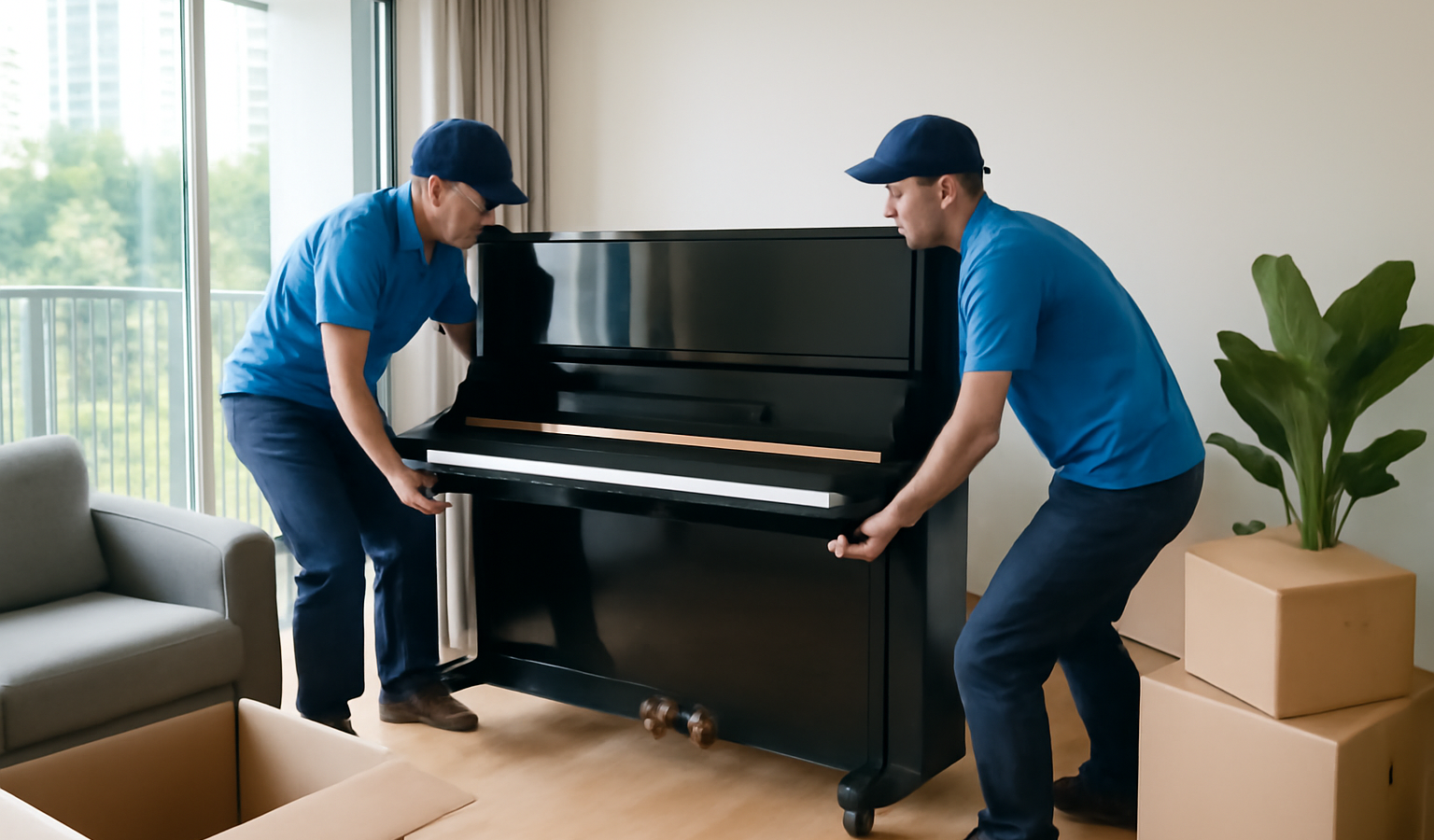
Most of a house move is boxes and furniture — heavy, but ordinary. Then there is the other category: the upright piano nobody has played since 2019, the four-foot aquarium with live fish, the fireproof safe, the treadmill. These items break backs, tiles and friendships when handled by enthusiastic amateurs, and even general moving crews treat them differently. If your move includes anything from this list, here is what actually happens, what it costs in Singapore, and how to prepare each item so moving day goes smoothly.
Why specialty items are quoted separately
Standard moving quotes assume items that two or three people can carry with straps and a trolley. Specialty items fail that assumption in one of three ways: extreme weight concentrated in a small footprint (safes, pianos), fragility combined with bulk (aquariums, marble tables, art), or awkward geometry that will not turn through a stairwell (large gym machines, oversized sofas). Each needs extra crew, specific equipment — piano skates, stair-climbing trolleys, hoisting straps — and sometimes disassembly skills.
That is why reputable Singapore movers price these as line items on top of the base move, factoring in weight, lift access versus stairs, and door and corridor clearances. When comparing quotes, declare every specialty item upfront with photos and rough dimensions. The alternative — a crew discovering an undeclared piano on moving day — usually ends in an on-the-spot surcharge or a refused item. Our moving cost checklist covers how these extras sit within a full moving budget.
Pianos: the classic specialty move
An upright piano typically weighs a few hundred kilograms, balanced high, on small castors that must never be rolled across floors. Professional piano movers use padded skates and straps, a minimum crew of three or four, and know how to protect both the instrument’s finish and your flooring. As a rough guide, an upright move within Singapore with lift access at both ends often falls somewhere around S$150 to S$400 or more, with surcharges per flight of stairs; grand pianos cost meaningfully more because the legs and pedal lyre are removed and the body travels on its side on a skid board.
Two things owners forget: first, book a tuning a few weeks after the move — transport and a new room’s humidity will pull the instrument out of tune, and letting it acclimatise first makes the tuning hold. Second, measure the destination: lift dimensions, door widths and any tight turns. In older walk-up blocks, a piano sometimes simply cannot make the turn, and knowing that before moving day beats discovering it on the landing.
Aquariums: the tank, the water, the livestock
An aquarium move is really three moves. The livestock travels separately — fish in bags or insulated containers filled with existing tank water, kept dark and temperature-stable, moved last and released first. The filter media must stay wet in tank water so the beneficial bacteria colony survives; a dried-out filter means restarting the nitrogen cycle and risking your fish. The tank itself travels empty — never move a tank with water or gravel in it, because the base seams are not designed for shifting loads and can fail silently, leaking days later.
Drain the tank, bag the substrate, wrap the glass generously and transport it flat and supported. At the new home, rebuild, refill (ideally with a good portion of the saved water), get the heater and filter running, and acclimatise fish gradually. Large tanks — say four feet and up — are genuinely two-person-plus glass handling jobs, and some movers will only carry the empty tank while leaving livestock logistics to you. If you also have furry animals in the move, our guide to moving with pets in Singapore covers that side.
Safes, gym equipment and other heavyweights
Safes concentrate enormous weight into a small box — even a modest home safe can exceed 100kg, and larger ones several times that. Movers use stair-climbing trolleys and charge by weight band and access. Empty the safe first, and check your new home’s intended spot can take the point load, particularly for raised platforms or timber flooring.
Treadmills and gym machines are less heavy than awkward: wide, unbalanced and full of pinch points. Fold and lock what folds, remove weight stacks or plates and box them separately, and photograph cable routings before any disassembly. Marble and stone tables travel with tops removed and carried vertically on edge, never flat. Large art and mirrors want corner protectors and rigid cladding — and this is where general fragile-packing discipline pays off; see our guide to packing fragile items for the technique.
Large wardrobes and system furniture deserve a mention too: many built-to-size or flat-pack wardrobes do not survive a move assembled and must be dismantled and rebuilt. Confirm whether your mover includes dismantling and reassembly, keep every screw and cam fitting bagged and taped to its panel, and accept that some flat-pack pieces simply lose rigidity after a rebuild — sometimes selling and rebuying beats moving them.
Insurance, liability and paperwork
Ask every mover two questions: what is covered if the item is damaged, and what is covered if the item damages something else — a gouged lift door in a condo comes out of somebody’s pocket. Basic coverage on many moving contracts is limited, and high-value items like pianos may need declared-value coverage or a rider. Get the coverage terms in writing, photograph the item’s condition from all sides before the crew arrives, and note existing scratches on the job sheet so there is no dispute later.
If your destination is a condo, remember specialty moves still fall under the estate’s move-in rules — lift bookings, deposits and permitted hours all apply, and a piano hoist or long carry may need extra clearance from management. Our guide to condo moving rules and deposits explains what to arrange.
How to brief movers for a clean quote
- List every specialty item explicitly — type, brand-class (upright vs grand, tank length), and approximate weight if known.
- Send photos of the item in place, plus the access route: lift, corridor, staircase, door.
- State both addresses’ access — lift or walk-up, storey, loading bay distance.
- Ask who actually does the job — in-house crew or subcontractor — and what equipment they bring.
- Confirm insurance for the item and for common property at both ends.
A mover who answers these crisply is a mover who has done it before. Vague confidence — “no problem, can lah” without questions — is the warning sign.
The bottom line
Specialty items reward honesty and preparation: declare them early, pay the fair surcharge for trained hands and proper equipment, and prepare each item the way its physics demands — pianos padded and skated, aquariums drained with livestock separate, safes emptied, machines disassembled. The cost of doing it right is modest; the cost of a dropped piano or a cracked tank is not. Tell us what you are moving below and get matched with movers who handle specialty items every week.
Frequently asked questions
How much does it cost to move a piano in Singapore?
As a rough 2026 guide, moving an upright piano within Singapore often runs from around S$150 to S$400+, rising with stairs, difficult access or distance; grand pianos cost more because they need partial disassembly. Get quotes from movers who handle pianos specifically.
Can regular movers move a piano?
Some larger companies have trained piano crews, but many general movers subcontract or decline. Ask directly whether they move pianos themselves, what equipment they use, and whether damage to the instrument is covered.
How do I move an aquarium with fish?
Fish travel separately in bags or insulated containers with tank water, never inside the tank. Drain the tank fully, keep filter media wet so beneficial bacteria survive, move the empty tank padded and flat, then rebuild and acclimatise the fish slowly at the new home.
Do movers charge extra for stairs?
Almost always for heavy specialty items. A walk-up flight of stairs can add a meaningful surcharge per storey for pianos and safes because the job needs more crew and more time — declare stair access when you get your quote.
Get moving quotes
Tell us about your move and we’ll help you get quotes from vetted Singapore movers. Free, no obligation.
More in Moving & Home Setup
See all
Cheap Storage Options in Singapore (2026)
Looking for cheap storage in Singapore? Learn to declutter first, weigh self-storage costs and find budget alternatives like box storage, shared and…

A Realistic Home Cleaning Schedule (2026)
A realistic home cleaning schedule for busy Singapore households: daily 10-minute resets, weekly rotations, monthly deep tasks and when to outsource.

Move or Renovate? How to Decide (2026)
Move or renovate? A practical framework for Singapore homeowners: compare true costs, disruption, what renovation can and cannot fix, and when moving…