
A Realistic Home Cleaning Schedule (2026)
Nobody fails at cleaning because they cannot mop. They fail because the mopping has no fixed home in the week, so it happens in guilt-fuelled binges — usually the day before guests arrive. The fix is not more effort but a schedule: a small set of daily habits, one weekly block, and a monthly rotation, tuned for Singapore’s particular mix of humidity, dust and open-window living. Here is a realistic system for a busy household, plus honest guidance on what to outsource.
Why Singapore homes need their own schedule
Generic cleaning schedules are written for temperate climates and carpeted houses. Singapore flats run differently. Humidity means bathrooms grow mould and mildew quickly if left damp, and dust clings rather than drifting. Open windows and nearby construction pull in fine urban dust daily. Ceiling and standing fans coat their blades in grey felt within weeks. Kitchens doing regular wok cooking build sticky grease film on hood, tiles and cabinet tops faster than an oven-centric kitchen ever would. And most of us live barefoot at home, so floors both get dirtier and get noticed more.
The practical consequence: bathrooms, floors and fans deserve higher frequency here than most guides suggest, while some temperate-climate staples (deep carpet care, radiator dusting) simply do not apply.
The daily reset: 10–15 minutes, non-negotiable
The daily layer is not cleaning so much as preventing accumulation. Done consistently, it is what makes a home look after itself:
- Kitchen closed down each night — dishes done or in the machine, sink emptied and wiped, stove surface wiped while grease is fresh.
- Bathroom quick pass — a squeegee or cloth over the shower glass and walls after the last shower; this single habit is the difference between weekly maintenance and monthly mould battles.
- Ten-minute tidy — everything back to its home, cushions straightened, surfaces cleared. If items have no home, that is an organisation problem, not a cleaning one — our guide to home organisation methods tackles that root cause.
- High-traffic floor spot-check — a robot vacuum run or a quick sweep of the kitchen and dining zone.
Split these across household members and no one person spends more than ten minutes. Children old enough to make a mess are old enough to own one line of this list.
The weekly block: 60–90 minutes, scheduled like an appointment
Pick a fixed slot — Saturday morning works for most working households — and run the same sequence every week so it becomes automatic:
- Dust top-down: shelves, TV console, window ledges, then skirting in the worst rooms.
- Floors throughout: vacuum or sweep every room, then mop hard floors.
- Bathrooms properly: toilet inside and out, basin, mirror, shower area scrubbed, floor washed.
- Kitchen beyond the daily wipe: sink descaled, splashback degreased, bin washed if needed, fridge exterior and handles.
- Bed linen changed — weekly to fortnightly depending on your tolerance and whether you sleep with aircon or fan.
Two adults working in parallel finish a typical HDB flat within the hour. The secret is refusing scope creep: the weekly block is maintenance, not deep cleaning. Deep tasks have their own slot below, which stops “clean the fan” from derailing “mop the floors”.
The monthly rotation: one deep task a week
Rather than a monster quarterly deep-clean, rotate one deeper task into each weekly session so nothing is ever more than a month or two old:
- Week 1 — air movers: fan blades, aircon return grilles and washable filters (the units themselves need periodic professional servicing).
- Week 2 — kitchen deep spot: hood filters degreased, microwave interior, one cabinet or the fridge interior.
- Week 3 — glass and tracks: interior windows, mirrors, and the window tracks where Singapore dust settles into grey silt.
- Week 4 — fabrics and edges: sofa vacuumed under cushions, mattress vacuumed, door mats washed, skirting throughout.
Beyond monthly sit the seasonal jobs — curtains washed, mattress rotated, high shelves, behind the fridge — which pair naturally with the servicing calendar in our home maintenance schedule for Singapore. Cleaning keeps the home pleasant; maintenance keeps it functioning. Run both and nothing ambushes you.
Tuning the schedule to your household
Couple, no kids, both working: the plan above as written; a robot vacuum on a daily timer buys back most of the floor work.
Family with young children: double the daily tidy (do a second sweep after bedtime), expect floors to need attention most days, and lower your standards for toy zones — contained mess is fine mess. Anchor the weekly block when children nap or during an outing.
Shift workers or frequent travellers: tie tasks to events rather than days — “bathroom scrub every third shower day”, “full floors on the first day off”. Event-based schedules survive irregular weeks; calendar-based ones collapse.
Home with pets: daily floor passes become genuinely non-negotiable, and fabric tasks move from monthly to weekly.
Kit that makes the schedule faster
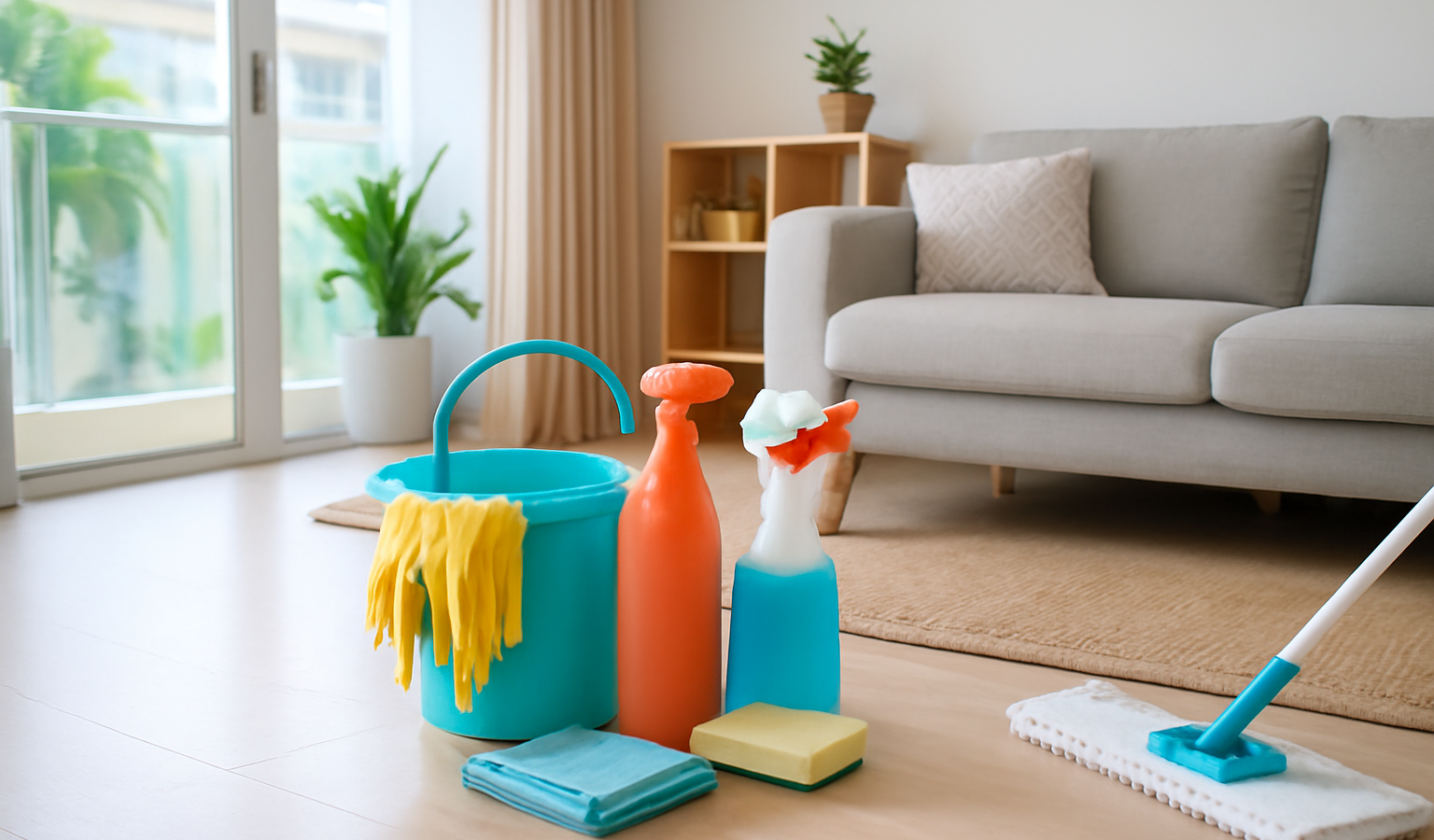
You do not need a cupboard of specialist products, but a few tools change the time-cost of every session. A flat microfibre mop with washable pads beats the bucket-and-wring ritual for weekly floors and makes mid-week spot-mopping a thirty-second job. A stack of microfibre cloths — colour-coded so bathroom cloths never meet kitchen counters — replaces most paper towels and half your sprays, since damp microfibre lifts dust and grease on its own. A bathroom squeegee hanging in the shower is what makes the daily glass wipe actually happen. A stick vacuum or robot vacuum covers the daily floor layer; the weekly session then only needs edges and corners. Keep a small caddy of basics — all-purpose spray, bathroom cleaner, degreaser — so the weekly block never starts with a hunt under the sink, and store a duplicate toilet brush and cloth set in each bathroom so cleaning one never means ferrying kit across the flat.
What to outsource, and when it pays
If your weekly block keeps losing to life, that is the layer to outsource — it is exactly what part-time cleaners do well. A regular weekly or fortnightly session of a few hours covers floors, bathrooms, dusting and ironing, and pricing in Singapore varies between freelance and agency arrangements; our comparison of part-time cleaner vs agency costs breaks down current rates and trade-offs.
Be clear-eyed about the division of labour: a cleaner resets the home weekly, but the daily layer stays yours — no Friday session can undo seven days of unwashed dishes. Deep specialist jobs (post-renovation cleaning, mattress or sofa shampooing, aircon servicing) are separate one-off services, not things to squeeze into a regular cleaner’s hours.
The bottom line
A realistic Singapore cleaning schedule is three layers: ten-minute daily resets that prevent accumulation, a fixed weekly block for floors and bathrooms, and a rotating monthly deep task so nothing decays quietly. Tune frequencies for humidity — bathrooms and fans especially — and match the plan to your actual week, not an idealised one. And if the weekly layer is the one that keeps slipping, hand it off: get matched with a reliable part-time cleaner below.
Frequently asked questions
How often should I clean my flat in Singapore?
A workable rhythm is: 10–15 minutes of daily reset (dishes, wipe-downs, quick floor pass in busy zones), one 60–90 minute weekly session for floors, bathrooms and dusting, and a monthly rotation for deeper tasks like fans, window tracks and appliance cleaning.
Why does my home get dusty so fast in Singapore?
Open windows, urban dust, construction nearby and fans circulating air all contribute, and humidity makes dust cling. Weekly dusting and floor cleaning, plus door mats and regular fan blade wipe-downs, keep it manageable.
How often should bathrooms be cleaned in a humid climate?
A quick daily squeegee or wipe after the last shower plus a proper weekly scrub prevents the mould and water stains that humidity accelerates. Leaving bathrooms two to three weeks between cleans is where mould problems start.
Is a weekly part-time cleaner worth it?
If the weekly block is what keeps collapsing in your schedule, yes — a few hours weekly or fortnightly covers floors, bathrooms and dusting. You still need the daily reset habit yourself, since no weekly visit can compensate for seven days of accumulation.
Get cleaning quotes
Tell us what you need cleaned and we’ll help you get quotes. Free, no obligation.
More in Moving & Home Setup
See all
Cheap Storage Options in Singapore (2026)
Looking for cheap storage in Singapore? Learn to declutter first, weigh self-storage costs and find budget alternatives like box storage, shared and…

Move or Renovate? How to Decide (2026)
Move or renovate? A practical framework for Singapore homeowners: compare true costs, disruption, what renovation can and cannot fix, and when moving…

Setting Up Recycling at Home (Blue Bins & E-Waste) (2026)
Recycling at home in Singapore made simple: what goes in the blue bins, what contaminates them, where e-waste bins are, and a…