
What Is a Coil Mattress? Types & How to Choose (2026)
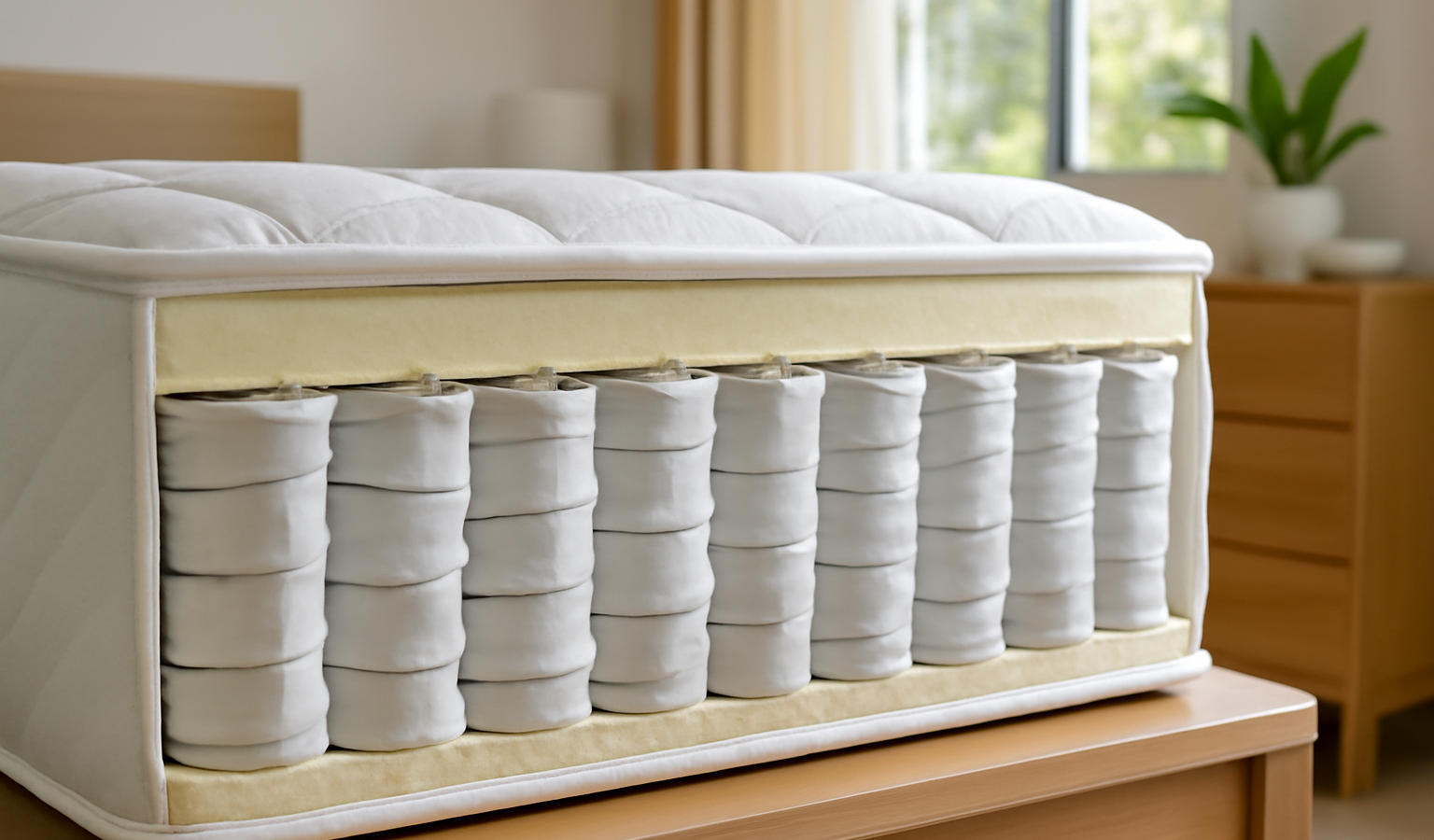
Push down on a traditional mattress and feel it push back with that familiar springy bounce, and you have met a coil mattress. It is the design most of us grew up sleeping on, and despite the rise of foam and hybrid beds it remains one of the most popular choices in Singapore. But not all coil mattresses are built the same, and the type of spring inside changes how the bed feels, how well it suits a couple, and how long it lasts. Here is how they work and how to pick a good one.
What a coil mattress actually is
A coil mattress, also called an innerspring mattress, is built around a support core of steel springs. Those springs carry your weight and provide the push-back that keeps your spine supported. On top of the coils sit comfort layers: foam, fibre padding, sometimes a quilted or pillow-top surface. These layers decide how soft or firm the bed feels against your body.
So a coil mattress is really two systems working together. The springs handle support and bounce; the top layers handle comfort and pressure relief. When people say a coil bed feels firm and responsive, they are describing that spring core doing its job. Understanding this split is the key to reading any mattress spec sheet.
The main types of coil
Not all springs are equal. The type of coil inside is the single biggest factor in how a coil mattress performs, so it is worth knowing the three you will meet most often.
Bonnell coils
The oldest and most familiar design. Bonnell coils are hourglass-shaped springs laced together into a single connected unit. They are sturdy, supportive and affordable, which is why you find them in budget and entry-level beds. The downside is that because the coils are joined, pressing on one moves its neighbours, so motion travels across the bed and the surface contours less precisely to your body.
Continuous and offset coils
A step up from Bonnell. Continuous coils are formed from a single long wire shaped into many springs, giving durable, uniform support. Offset coils are shaped to hinge and flex, so they follow body contours a little better than plain Bonnell while keeping good support. Both sit in the mid-range.
Pocketed coils
The premium design in most modern coil beds. Each spring is wrapped in its own fabric pocket, so it can compress independently of the ones around it. That independence brings two big benefits: much less motion transfer, and better contouring because the coils under your shoulders and hips move separately. For couples, pocketed coils are usually the ones to look for.
| Coil type | Feel | Motion transfer | Typical tier |
|---|---|---|---|
| Bonnell | Firm, bouncy | High | Budget |
| Continuous / offset | Supportive, even | Medium | Mid-range |
| Pocketed | Contouring, responsive | Low | Mid to premium |
Coil count and gauge: useful but overrated
Spec sheets love to quote a coil count and a wire gauge. A higher coil count can mean more points of support, and a lower gauge number means thicker, firmer wire. These are rough indicators of quality, but do not treat them as scores. A bed with 1,000 well-designed pocketed coils can easily outperform one boasting 2,000 cheap ones. Beyond a sensible level, more coils bring diminishing returns.
Gauge works the same way. Thicker wire feels firmer and can last longer; thinner wire feels softer and more responsive. Neither is universally better; it depends on the feel you want. Treat these numbers as one clue among many, and let how the bed actually feels under your body be the deciding vote.
Coil versus foam versus hybrid
Coil beds are not your only option. All-foam mattresses swap springs for layers of foam, giving a closer, body-hugging feel with excellent motion isolation but sometimes running warm. Hybrids combine a pocketed coil core with generous foam comfort layers, aiming to blend spring support and airflow with foam pressure relief.
If you are weighing these up, our full comparison of foam versus hybrid versus spring mattresses breaks down who each suits. In short: pure coil for a firm, breathable, bouncy feel; foam for a cradling, quiet feel; hybrid for a middle path that many find the easiest all-rounder.
Why coils suit Singapore’s climate
One genuine advantage of coil and hybrid beds in Singapore is temperature. The open spring core lets air circulate through the mattress, so heat and moisture do not build up the way they can in a dense block of foam. On warm, humid nights that airflow keeps the surface feeling cooler and fresher, which many local sleepers appreciate.
Good ventilation also helps with moisture management, always a concern in our climate. Pair a breathable coil bed with a good mattress protector and breathable sheets, and you give humidity fewer places to settle. It still pays to air and rotate the bed regularly, but the spring core gives you a head start on staying cool.
Edge support, durability and motion
Coil mattresses often have strong edge support, especially models with reinforced perimeter springs. That means you can sit or sleep near the edge without the mattress collapsing, and you get more usable surface, handy on a shared bed. Foam beds tend to be weaker at the edges.
On durability, a well-made coil or hybrid bed typically lasts around 7 to 10 years, though this depends on build quality, body weight and care. On motion transfer, remember the coil type rules: Bonnell springs pass movement across the bed, while pocketed coils absorb it, so a restless partner disturbs you far less. Rotating the mattress and using a protector both help it go the distance. Our notes on keeping a mattress clean cover the upkeep.
How to choose a coil mattress
Start with the coil type. If you share the bed, prioritise pocketed coils for low motion transfer. Next, decide on firmness, which comes mainly from the comfort layers on top, not the springs alone. Lie on the bed in your normal sleeping position for a few minutes if you can; a quick sit tells you little. Check the edge support by sitting on the side. Treat coil counts and gauge as background detail, not the headline. Finally, match the size to your room and think about airflow, which matters in our climate. Get those basics right and a coil mattress can be a supportive, breathable, long-lasting choice.
The bottom line
A coil mattress supports you with a core of steel springs and shapes its feel with foam or padding on top. The type of coil is what really counts: Bonnell springs are firm, cheap and connected; continuous and offset coils sit in the middle; and pocketed coils, wrapped individually, give the best contouring and the least motion transfer, making them the pick for couples. Coil and hybrid beds breathe well, which suits Singapore’s humidity, and they offer solid edge support and durability. Do not get hung up on coil counts; trust how the bed feels and choose the spring type that matches how you sleep. To see where coils sit among the alternatives, browse the wider home and furniture guides.
Frequently asked questions
What is a coil mattress made of?
A coil mattress has a support core of steel springs plus comfort layers of foam, fibre or padding on top. The springs provide bounce and support while the top layers shape the feel, from firm to plush.
Are pocketed coils better than Bonnell springs?
For most people, yes. Pocketed coils are wrapped individually so they respond independently, which means less motion transfer and better body contouring. Bonnell springs are interconnected, cheaper and firmer but transmit movement more.
Is a coil mattress good for hot, humid weather?
Generally yes. The open spring core lets air flow through the mattress, so coil and hybrid beds tend to sleep cooler than dense all-foam beds. That airflow is helpful in Singapore's climate.
How long does a coil mattress last?
A well-made coil or hybrid mattress typically lasts around 7 to 10 years with proper care, though this varies with build quality, usage and body weight. Rotating it and using a protector helps it last.
More in Furniture & Homeware
See all
Storage Ottomans & Benches: A Buying Guide
A storage ottoman or bench adds hidden storage and seating in small SG flats. Our buying guide covers types, sizes, materials, lids…

How to Measure for Curtains (2026)
How to measure curtains for Singapore homes: rod and track width, drop options, fullness ratio and day-and-night layering, all in cm and…

How to Measure a Room for Furniture (2026)
Learn how to measure a room for furniture step by step: length, width, doorways, delivery access, power points and walkways, plus a…