
Curtains vs Blinds for Your HDB: Which to Choose (2026)
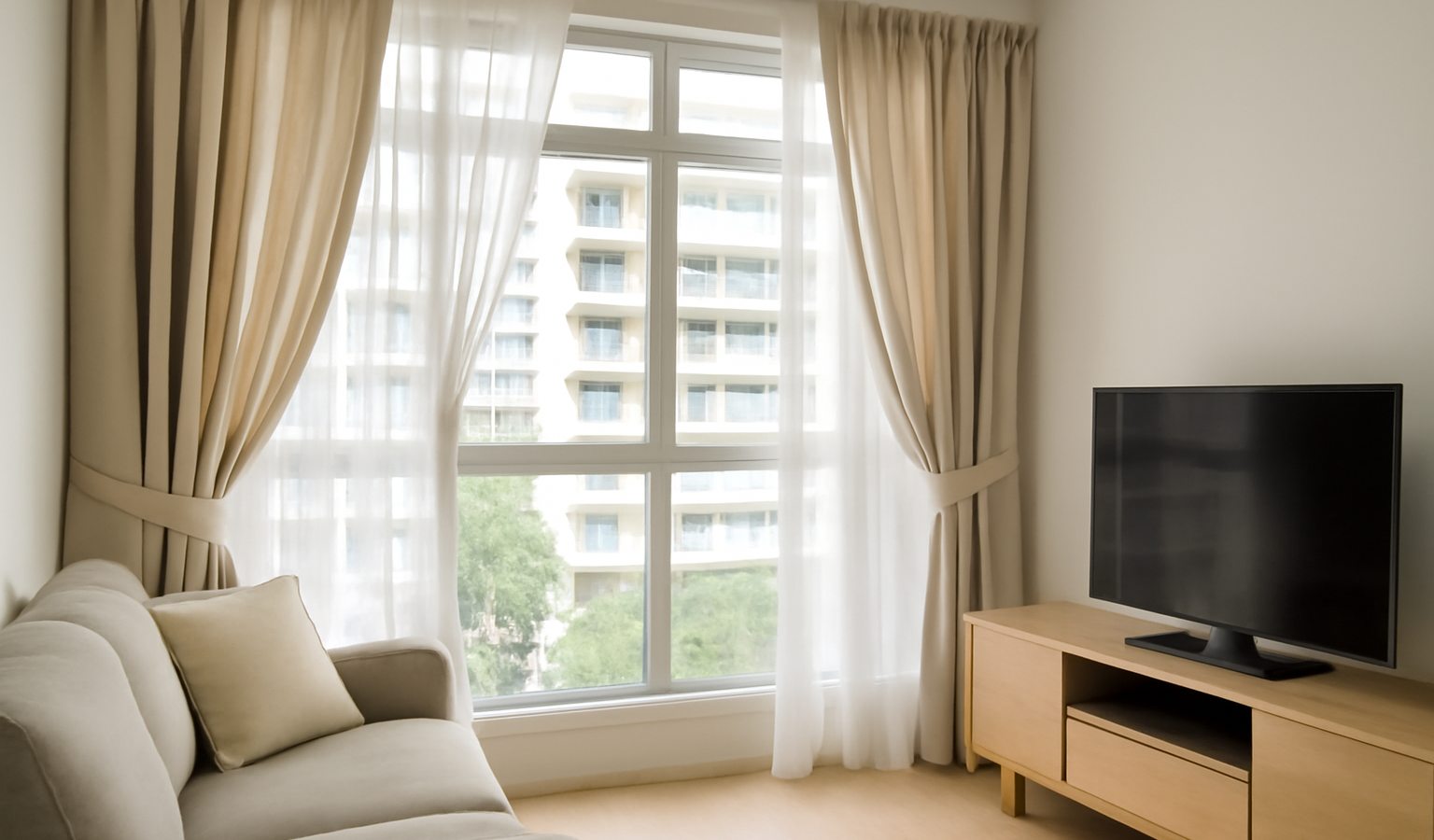
Every new home in Singapore eventually reaches the same crossroads: bare windows that let the neighbours see in and the afternoon sun cook the living room. The question is whether to dress them with curtains or blinds. Both work, both come in a huge range of prices, and the “right” answer changes from room to room — a choice that looks obvious in a showroom feels less so once you factor in the west sun, our relentless humidity and the quirks of HDB windows.
What curtains do best
Curtains are fabric, and fabric brings warmth. They soften a room visually, absorb sound so a hard-surfaced HDB flat feels less echoey, and add a genuine layer of heat and light insulation because the material drapes from ceiling to floor. That full coverage is why curtains still dominate Singapore bedrooms.
They are also forgiving. If your window frame is slightly uneven or an awkward size, floor-length curtains hide it where a rigid blind would highlight every millimetre. Most curtain panels come down off the track and go straight into the washing machine, which matters more than you’d think in a climate that grows mould on anything left damp. The trade-off is bulk: curtains eat a little floor and wall space, and they need a track or rod to hang from — not always trivial on HDB windows.
What blinds do best
Blinds win on precision and space. With a twist of the wand or a pull of the chain you can dial light from fully open to fully shut, or tilt slats to let in a sliver without exposing the whole room. They sit flush to the window, so they suit narrow sills, kitchens and study nooks where billowing fabric would get in the way.
There is a blind for almost every need. Roller blinds are clean and minimal; venetian blinds (aluminium or faux-wood slats) give fine light control; vertical blinds suit wide sliding doors; Roman blinds fold up in soft fabric pleats for a curtain-like look; and zebra or day-night blinds layer sheer and solid bands so you can shift between filtered and blocked light. The downside is cleaning — slatted types collect dust on every surface, and in humid air that dust clings.
Match the treatment to the room
You don’t have to pick one and commit the whole flat to it. The smartest HDB homes mix and match:
- Bedrooms: a day-and-night curtain setup — sheer inner layer for daytime privacy, blackout outer layer for sleep — is the Singapore default, and for good reason.
- Living room: curtains for a soft, welcoming feel, or roller blinds if you prefer a clean modern line. Both cope well with a large main window.
- Kitchen: blinds, and specifically wipeable ones. Cooking grease and steam ruin fabric quickly, so aluminium venetian or a washable roller blind lasts longer.
- Study or work nook: blinds let you cut glare on a screen without plunging the room into darkness.
Getting the window right is part of a bigger picture of soft furnishings that make a flat feel finished, from rugs to bedding. If you are furnishing from scratch, our guide to furnishing a rental in Singapore on a budget shows where window dressing fits in the wider spend.
The Singapore factors that change the answer
Three local realities should weigh on your decision more than aesthetics alone. First, the west sun: a west- or afternoon-facing flat gets fierce heat and glare, so you want blackout curtains or solar/blackout roller blinds that reject heat, not just light. Second, humidity and mould: fabric near a wet kitchen or a window that gets rained in can grow mould, so choose washable or wipeable options and let them dry.
Third, HDB window types. Older flats often have casement windows that swing open, while others have sliding or top-hung windows — each affects whether a blind can mount inside the recess or must go on the wall, and whether a curtain track clears the opening. Measure your actual windows before you fall in love with a look. Managing sun, heat and humidity at the window also lightens the load on your cooling; it pairs well with the steps in our piece on making the most of a compact HDB layout.
Cost, motorisation and what you’re really paying for
Prices swing widely with size, fabric quality, mechanism and whether you motorise. As a rough guide, budget roughly a low-to-mid three-figure sum per HDB window for curtains including the track, and a broadly similar or slightly lower range for quality roller blinds — but treat every figure as indicative and get a current quote, because a large living-room window costs far more than a small bedroom one.
Motorised curtains and blinds are increasingly common and genuinely useful for a hard-to-reach living-room window or a smart-home setup, though they add a clear premium and may need a nearby power point. If you are weighing motorised options, factor the wiring into your planning the same way you would any electrical addition — get a licensed electrician if a new point is needed rather than improvising.
It also pays to understand what drives the price of each option. With curtains, most of the cost is fabric — the number of panels, the weight and quality of the material, and whether you add a separate sheer layer all push the figure up, while the track itself is comparatively cheap. With blinds, you are paying for the mechanism and the slat or fabric quality, so a wide window or a solar-grade roller costs more than a small basic one. A whole flat of windows adds up quickly either way, so it’s worth deciding which rooms genuinely need premium blackout or heat-rejecting treatment and where a simpler, cheaper option will do. Bedrooms and sun-facing rooms deserve the spend; a spare room or a rarely used window rarely does.
Cleaning and upkeep over the years
Whatever you choose, plan for maintenance, because a window treatment lives for years in a dusty, humid environment. Curtains want a wash every few months and full drying to prevent mould. Roller blinds need an occasional wipe and a vacuum with a brush attachment. Venetian and vertical blinds are the highest-effort of all — each slat collects dust, and in our climate that turns to grime, so a regular wipe-down is non-negotiable if you want them to look good.
Think about longevity too. Cheap blinds with flimsy mechanisms fail early, and sun-facing fabric fades. Spending a little more on the pieces that face the harshest light usually saves money over the life of the flat. The same buy-well-once logic applies across the home, whether you are choosing a treatment or picking a dining table built to survive Singapore’s humidity.
The bottom line
Curtains and blinds are not really rivals — they are tools for different jobs. Reach for curtains where you want warmth, quiet, easy washing and reliable blackout, which usually means bedrooms and living rooms. Reach for blinds where you want precise light control and a slim profile, which usually means kitchens, study corners and awkward windows. Let your window type, sun exposure and cleaning appetite settle any close calls, mix the two across the flat, and you’ll get a home that is comfortable, cool and easy to live with all year round.
Frequently asked questions
Are curtains or blinds better for blocking Singapore's west sun?
Blackout curtains or solar/blackout roller blinds both work. Curtains add extra heat and light insulation because the fabric drapes fully, while roller blinds fitted close to the glass give a neater look with less bulk.
Which is easier to clean in humid Singapore?
Curtains, generally. Most can go in the washing machine, whereas venetian and vertical blinds trap dust on every slat and need wiping by hand. Roller blinds sit in between and can be spot-cleaned.
How much do curtains or blinds cost per HDB window?
As a rough guide, expect roughly a low-to-mid three-figure sum per window for curtains including tracks, and a similar or slightly lower range for roller blinds, varying widely by size, fabric and whether they are motorised. Always get a current quote.
Can I fit blinds on HDB casement windows?
Yes, usually by mounting inside the window recess or onto the wall above it. Casement windows that swing inward may clash with recess-mounted blinds, so measure carefully or choose an outside mount.
More in Furniture & Homeware
See all
Storage Ottomans & Benches: A Buying Guide
A storage ottoman or bench adds hidden storage and seating in small SG flats. Our buying guide covers types, sizes, materials, lids…

How to Measure for Curtains (2026)
How to measure curtains for Singapore homes: rod and track width, drop options, fullness ratio and day-and-night layering, all in cm and…

How to Measure a Room for Furniture (2026)
Learn how to measure a room for furniture step by step: length, width, doorways, delivery access, power points and walkways, plus a…