
Dressing Tables & Vanities: How to Choose (2026)
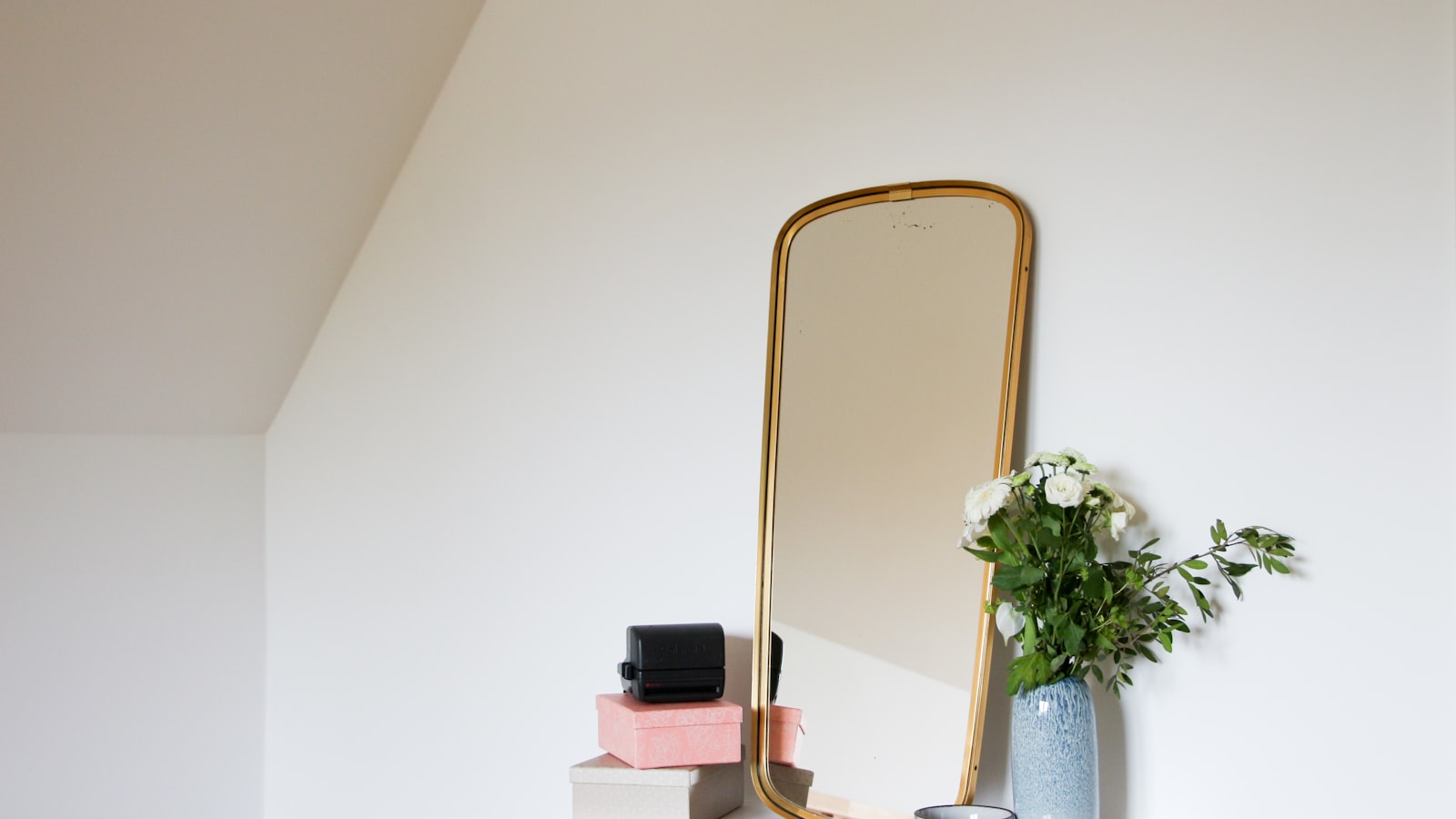
A dressing table is one of those pieces people either use every single day or abandon as an expensive clutter magnet within a month. The difference usually comes down to three decisions made before buying: whether the room can actually spare the space, whether the mirror and lighting let you see yourself properly, and whether the storage matches what you own. Get those right and a vanity earns its keep for years — even in a compact HDB bedroom.
Start with the space, not the table
The table itself is only half the footprint. You also need room to sit at it: allow roughly 70–80cm of clearance in front for a stool and your knees, plus space to pull the stool out. In a typical HDB bedroom that already holds a queen bed and a wardrobe, that clearance is the real constraint — plenty of rooms can fit a 40cm-deep table but not the seat in front of it.
Measure the wall you have in mind, then check the walkways. If the vanity forces you to shuffle sideways past the bed every morning, you will stop using it. Our guide to bedroom layouts for HDB flats covers how to carve out a workable corner. As a rough sizing guide, tables around 80–100cm wide suit most rooms; slim consoles at 60–75cm wide and 30–35cm deep work where space is tight, though you sacrifice surface area and drawer depth.
Height matters too. Most dressing tables sit at about 75cm, the same as a desk. Pair it with a stool or chair that puts your face comfortably in the mirror — too low and you’ll hunch, too high and your knees hit the drawer.
Wall-mounted vs freestanding
Wall-mounted vanities — essentially a floating shelf or shallow cabinet with a mirror above — are the space-saver’s option. The floor underneath stays visible, which makes a small room feel less crowded, and you can mount it at exactly the height you want. The trade-offs: installation means drilling into a wall (get a proper installer for concrete HDB walls), storage is limited to one shallow drawer or compartment, and it stays behind when you move.
Freestanding tables give you more of everything — drawers, surface, flexibility. You can reposition them, take them to your next home, and skip drilling entirely, which matters if you rent. If you’re furnishing a rental, freestanding wins almost by default — landlords rarely welcome fresh drill holes, so think twice before committing to anything wall-mounted.
There’s a middle path: a freestanding table with a separate wall-hung mirror above it. You get the storage of a table and the clean look of a floating mirror, and the mirror only needs one or two fixing points.
Getting the mirror right
The mirror is the point of the whole exercise, so don’t treat it as an afterthought. A mirror around 50–70cm tall covers face and shoulders for seated grooming; go larger if you also want an outfit check. Tri-fold mirrors let you see your profile and the back of your head, which a flat mirror never will — useful if you style your hair at the table.
Position the table where the mirror won’t fight the light. Facing a window is ideal (daylight lands on your face); backing onto one is the worst option, because you become a silhouette. A well-placed mirror also does double duty for the room itself — a large one bounces light around and makes a small bedroom feel bigger, a trick we cover in how mirrors make small spaces feel larger.
Lighting: the detail most people miss
Bad lighting is the number one reason vanities go unused. A ceiling light behind your head casts your face into shadow, making makeup and skincare guesswork. What you want is even light hitting your face from the front.
The simplest fix is a mirror with built-in LEDs around the border — widely available and usually with adjustable colour temperature. Warm-to-neutral light (around 3000–4000K) is the most flattering and realistic for daily use; very cool light shows detail but can read harsh. If your mirror is plain, a pair of small lamps or wall lights flanking it does the same job. Avoid a single lamp on one side, which lights half your face and shadows the other.
Storage that keeps the surface clear
A vanity works when the top stays mostly empty and everything has a drawer. Before buying, take stock of what you actually own: daily makeup, skincare bottles, hair tools, jewellery. Then match the storage to it.
- Shallow top drawers suit makeup and jewellery — with dividers or small trays so items don’t slide into a heap.
- One deeper drawer handles tall skincare bottles and backup stock.
- A side cubby or hook keeps a hairdryer off the tabletop; heat-resistant holders exist for styling irons.
- A small tray on top for the three or four items you use every day — everything else goes away after use.
If the table you love is short on drawers, a slim trolley or a small drawer unit tucked beside or beneath it fills the gap cheaply.
Alternatives when a vanity won’t fit
Not every room can spare a dedicated dressing table, and that’s fine. A desk doubles up well: add a tabletop mirror, keep one drawer for makeup, and you have a workspace and vanity in one footprint. A chest of drawers at the right height plus a wall mirror does the standing version of the same job.
A wardrobe with mirrored doors is the biggest space-saver of all — full-length mirror, zero extra floor area — and pairs well with a small drawer unit inside for cosmetics. If you’re choosing wardrobes anyway, our guide on how to choose a wardrobe covers mirrored doors and internal fittings. And browse the wider furniture and homeware guides for more small-space ideas.
Buying used: good value, few risks
Dressing tables are among the safest furniture pieces to buy second-hand. They take little physical abuse compared with sofas or dining tables, and sellers upgrading or relocating often let good ones go cheaply. As a rough guide, used tables commonly sell for well under half their retail price.
Check three things in person: drawer runners (open every drawer fully — sticking or sagging is a pain to fix), the mirror surface (black spots at the edges mean the backing is degrading), and overall stability (wobble usually means loose joints, which may or may not be tightenable). Measure your lift and doorway before agreeing to collect — a table with a fixed tall mirror is more awkward to transport than it looks, though many designs let you unbolt the mirror for the trip.
The bottom line
Choose the space first, then the table. Confirm you have 70–80cm of sitting clearance, decide between wall-mounted (small rooms, owned homes) and freestanding (renters, storage needs), and spend your attention on the mirror and lighting — a modest table with great front-facing light beats an elaborate one you can’t see yourself in. Match drawers to what you own, consider a desk or mirrored wardrobe if space is genuinely tight, and check the second-hand market before paying retail. The best vanity is the one you still use in a year.
Frequently asked questions
What size dressing table fits an HDB bedroom?
Most HDB bedrooms comfortably take a table around 80–100cm wide and 40cm deep. Slim consoles at 30–35cm deep work in tighter rooms, as long as you keep about 70–80cm of clearance in front for a stool.
Is a wall-mounted vanity better than a freestanding one?
Wall-mounted units suit small rooms because the floor stays clear and you can set the height to suit you. Freestanding tables hold more, need no drilling, and are the safer choice for rentals.
What lighting is best for a dressing table?
Even, front-facing light at face level — either a mirror with built-in LEDs or wall lights on both sides. Avoid relying on a ceiling light behind you, which throws shadows on your face.
Is it worth buying a dressing table second-hand?
Yes — dressing tables are lightly used furniture and often sell for a fraction of retail. Check drawer runners, mirror condition and stability, and confirm it fits through your door and lift before committing.
More in Furniture & Homeware
See all
Storage Ottomans & Benches: A Buying Guide
A storage ottoman or bench adds hidden storage and seating in small SG flats. Our buying guide covers types, sizes, materials, lids…

How to Measure for Curtains (2026)
How to measure curtains for Singapore homes: rod and track width, drop options, fullness ratio and day-and-night layering, all in cm and…

How to Measure a Room for Furniture (2026)
Learn how to measure a room for furniture step by step: length, width, doorways, delivery access, power points and walkways, plus a…