
Resale Flat Handover: What to Check Before & After (2026)
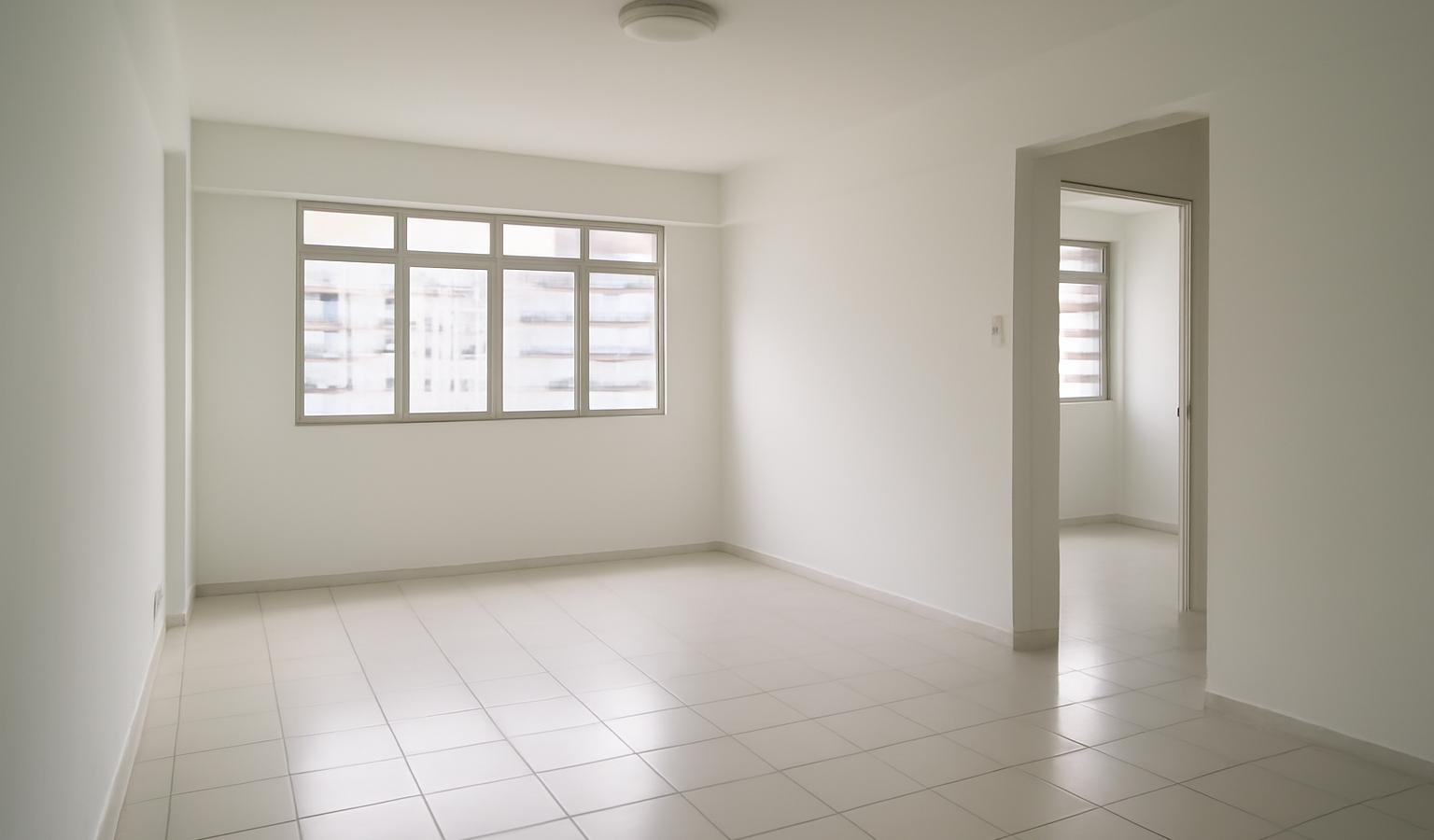
Buying a resale flat has one sobering difference from a BTO: there is no one-year defects window, no building contractor obliged to return and fix things. The moment the sale completes, the flat — hollow tiles, temperamental window hinges, mystery stains and all — is entirely yours. That makes the days around handover disproportionately important. Here is what to check before completion, what to do on the day itself, and how to sequence the first weeks after.
Understand what you’re entitled to at completion
Your purchase terms — whether an HDB resale completed at HDB Hub or a private resale through lawyers — will generally entitle you to vacant possession: the sellers move out, remove their belongings, and hand over a flat empty except for items you specifically agreed they’d leave. Fixtures and any negotiated inclusions (air-conditioners, built-in wardrobes, water heater, sometimes furniture) should be listed somewhere concrete: the OTP terms, an inventory list, or written correspondence. If your agreement was vague, tighten it up in writing before completion week, not on the doorstep.
It’s also standard for sellers to settle their outstanding bills — service and conservancy charges for HDB, or maintenance fees for condos, plus utilities — up to completion, with apportionments handled in the completion accounts. Your conveyancing lawyer or HDB’s process handles the arithmetic; your job is the physical reality of the flat.
The final inspection: your last real checkpoint
Arrange to inspect the flat close to completion — ideally within the final few days. Bring your viewing photos for comparison, and check:
- Moving-out progress. The flat should be empty or clearly nearly so. A flat still fully furnished two days before completion is a red flag worth escalating through your agent or lawyer immediately.
- Agreed items still present. Air-conditioners, hood and hob, wardrobes, light fittings — whatever was included should still be there and in the same condition. Sellers swapping out appliances between viewing and completion is rare but not unheard of.
- New damage. Moving out is rough on flats. Look for gouged floors, damaged door frames, holes from removed fixtures.
- Everything works. Run every tap, flush every toilet, test the water heater, switch on all air-conditioners and note whether they cool, open and close every window and door.
If something is wrong, this is the moment you still have leverage — completion money hasn’t changed hands. Raise issues through your agent or lawyer and get resolutions (rectification, a price adjustment, or a holdback) agreed in writing.
Handover day: keys, meters, photos
On completion day, once the transaction is done, you collect keys — all of them. Test the main door, gate, letterbox, and any access cards for the block or condo facilities on the spot. Then do a slow lap of the flat with your phone:
- Photograph every meter — electricity, water, gas — with readings legible. This protects you if the seller’s final bill and your first bill overlap messily.
- Photograph each room’s condition and every included item.
- Count keys and cards against what the seller says exists; ask explicitly whether any copies are floating around. Many buyers change the lock cylinder or main door lock within the first week for peace of mind — a locksmith visit is cheap insurance.
For an HDB resale, confirm any flat-specific matters flagged during the process (like existing renovation approvals) are documented, since unauthorised works by a previous owner can become the new owner’s problem to regularise.
Immediately after: accounts, address, insurance
The first week’s admin, in rough order of urgency:
- Utilities. Open your own account with SP Group or a retailer from the completion date — don’t ride on the seller’s account. Booking broadband early matters too; installation slots can take a while. Our guide to setting up utilities and Wi-Fi in a new home has the full sequence.
- Insurance. If you’re on an HDB loan, HDB’s compulsory fire insurance applies; either way, consider home contents insurance, since fire insurance doesn’t cover renovations or belongings. Our primer on home insurance basics in Singapore explains the difference.
- Address updates. Update your NRIC address within 28 days as required, then banks, employer, insurers, subscriptions and deliveries.
- S&CC or maintenance account. Make sure the town council or MCST account is now in your name and billing starts cleanly from completion.
Assess before you renovate
Resale flats reward a short pause before renovation. Live with the layout on paper for a week: check where the sun hits, which walls carry pipes, how old the wiring and DB box look, and whether the bathrooms’ waterproofing shows signs of age (stains on the ceiling below are the classic tell — ask the neighbour downstairs if in doubt). An older flat may need rewiring or re-piping folded into the renovation scope, which changes budgets meaningfully. Any hacking, wet works or window changes in an HDB flat need the proper permits and an HDB-listed contractor, so factor approval time into your move-in date.
If the flat is livable as-is, consider moving in first and renovating in phases — you’ll make better decisions about a home you’ve actually lived in, and you avoid paying rent and mortgage simultaneously.
Common handover disputes — and how to head them off
Most resale handover friction falls into three buckets, all preventable with paperwork. Missing inclusions — the ceiling fans or wardrobe that vanished between viewing and completion — are only arguable if the inventory was written down; verbal assurances at a viewing evaporate under pressure, so get inclusions listed during negotiation, not remembered afterwards. Condition surprises — damage discovered after completion — are hard to pin on sellers once the deal is done, which is exactly why the final inspection and time-stamped photos matter; anything serious found before completion should go through your agent or lawyer while leverage still exists. Bills and apportionments — utilities, S&CC and property tax straddling the completion date — are normally resolved in the completion accounts, and your own meter photos close the loop on any utility overlap.
If a genuine dispute somehow survives completion, the escalation ladder mirrors any consumer disagreement: written negotiation first, then mediation, then the Small Claims Tribunals for amounts within their limits. In practice, almost everything is decided by the quality of your documentation — the buyer with dated photos and a written inventory rarely needs the ladder at all.
Plan the move only when dates are firm
Resale completions can shift by days or weeks, so book movers with that reality in mind: confirm dates once completion is locked, and prefer movers with reasonable rescheduling terms. As a rough guide, a professional local move for a typical flat runs from a few hundred dollars upward depending on volume, access (lift versus stairs) and distance — itemised quotes beat guesswork. Work through our moving house cost checklist so nothing ambushes your budget, and if your timeline is tight, a structured 4-week moving checklist keeps the packing honest.
The bottom line
A resale handover compresses everything a BTO spreads over a year into one week: inspection, completion, keys, meters, accounts and locks. Your protection isn’t a defects liability period — it’s a thorough final inspection while you still have leverage, and time-stamped photos of everything on handover day. Get the admin done in week one, pause before renovating, and firm up the move once completion is certain. When it is, get matched with trusted movers below.
Frequently asked questions
Is there a defects liability period for resale flats?
No. Resale flats are sold on an as-is basis, so there's no defects liability period like a new BTO has. Any issues you accept at completion become yours, which is why the final inspection matters so much.
When should I do the final inspection of a resale flat?
As close to the completion date as practical — commonly within the last few days before completion. The point is to confirm the flat's condition matches what you agreed and that the sellers have moved out or are clearly on track to.
What is vacant possession?
It means the sellers hand the flat over empty of occupants and their belongings (except items you agreed they'd leave, like air-conditioners or wardrobes). If tenants or furniture remain at completion, raise it before completing.
What should I photograph on handover day?
Meter readings for electricity, water and gas, the condition of every room, any items the sellers agreed to leave, and anything damaged. Time-stamped photos protect you in disputes over final utility bills or missing items.
Get moving quotes
Tell us about your move and we’ll help you get quotes from vetted Singapore movers. Free, no obligation.
More in Moving & Home Setup
See all
Cheap Storage Options in Singapore (2026)
Looking for cheap storage in Singapore? Learn to declutter first, weigh self-storage costs and find budget alternatives like box storage, shared and…

A Realistic Home Cleaning Schedule (2026)
A realistic home cleaning schedule for busy Singapore households: daily 10-minute resets, weekly rotations, monthly deep tasks and when to outsource.

Move or Renovate? How to Decide (2026)
Move or renovate? A practical framework for Singapore homeowners: compare true costs, disruption, what renovation can and cannot fix, and when moving…