
7 Second-Hand Shopping Mistakes to Avoid (2026)
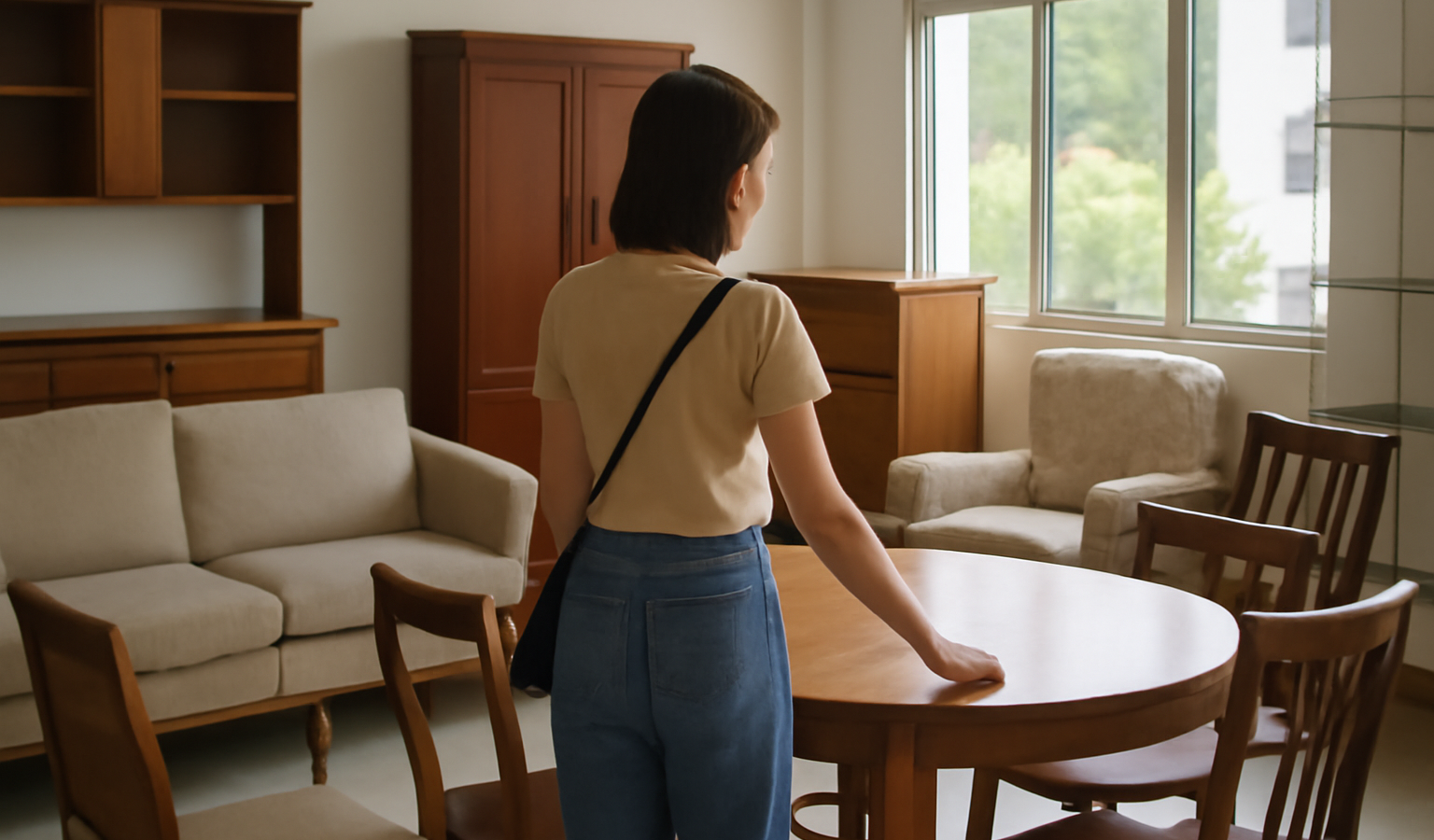
Buying used is one of the smartest ways to furnish and run a home in Singapore — a flat can be kitted out for a fraction of retail if you know what you are doing. But the savings evaporate fast when a “bargain” wardrobe will not fit in the lift, or a washing machine dies two weeks after collection. Most bad second-hand experiences trace back to the same handful of avoidable errors. Here are the seven that catch buyers most often, and how to sidestep each one.
Mistake 1: Paying before you inspect
The most expensive mistake is also the most common: transferring money — a deposit, or worse, the full price — before you have seen the item. Scammers rely on urgency (“three other people are asking, a deposit will secure it”) to get payment from buyers who never receive anything at all. Even with honest sellers, photos hide scratches, smells, and faults that a two-minute inspection would reveal.
The rule is simple: no viewing, no money. For anything electrical, ask the seller to plug it in and run it while you watch. For furniture, sit on it, open every drawer, check for wobble and water damage. If a seller refuses an in-person inspection for a high-value item, walk away — there will always be another listing. Our buying and selling safety guide covers meet-up and payment safety in more detail.
Mistake 2: Ignoring the true total cost
A S$150 sofa is not a S$150 sofa if it costs S$80 to transport across the island, needs a S$60 professional clean, and requires a replacement leg. Before committing to any bulky or imperfect item, add up the full landed cost: the price, the delivery or van hire, cleaning, and any repair or missing parts. Then compare that total against a budget new equivalent.
This is where plenty of “bargains” quietly lose to new items that come with free delivery, assembly and a warranty. The used option often still wins — solid wood furniture and barely-used appliances can be exceptional value — but only run the numbers first. Our guide to what’s worth buying used in Singapore breaks down which categories reliably justify the hassle.
Mistake 3: Skipping the measuring tape
Second-hand furniture is sold as-is, where-is, and no-returns — which makes a sizing error permanent. Before you even message the seller, measure three things: the space at home where the item will live, your doorways and corridor turns, and your lift. HDB lift doors and older condo lifts are less forgiving than showroom-to-loading-dock logistics, and a sofa that will not make the turn into your bedroom is now your problem, not the seller’s.
Ask the seller for exact dimensions rather than trusting the photo, and check whether the item disassembles. A bed frame that breaks down into slats travels easily; a glued wardrobe often does not survive the trip at all.
Mistake 4: Buying the wrong things used
Some categories are simply poor second-hand buys regardless of price. Mattresses and pillows carry hygiene risks you cannot inspect away. Helmets and child car seats can have invisible structural damage from a single drop or accident. Very old refrigerators and air-conditioners may run, but their energy consumption can cost you more over a year than the purchase price saved.
Electronics sit in a middle zone: fine used if recent and testable, risky if old or heavily worn. Batteries degrade, warranties rarely transfer, and hidden faults surface late. If you want the discount with less risk, a refurbished unit with a seller warranty is often the smarter route — we compare the options in our guide to refurbished vs used electronics.
Mistake 5: Not vetting the seller
Two minutes on a seller’s profile tells you a lot. Look at their review history, how long the account has existed, and what else they are selling. A brand-new account listing ten high-demand gadgets at suspiciously low prices is a pattern worth avoiding. So is a seller who dodges basic questions — how old is it, why are you selling, does it have any faults — or who pushes hard for off-platform payment before you have met.
None of this requires paranoia. Most sellers in Singapore are ordinary people clearing space before a move or an upgrade. Vetting simply filters out the small minority who are not, and it costs you nothing.
Mistake 6: Buying it because it’s cheap
The second-hand market is full of genuinely good deals on things you do not need. A S$30 exercise bike is not a saving if it becomes a clothes rack; it is S$30 spent plus a square metre of your flat gone. The test is brutal but useful: would you have bought this item at its new price if you needed it? If the answer is no, the discount is irrelevant — you are not saving money, you are spending it.
This matters double in Singapore, where space is the scarcest resource in most homes. Every impulse purchase has a storage cost even when the price is right. Buy from a list, not from the feed.
Mistake 7: Forgetting collection logistics until it’s too late
You won the negotiation, agreed a price — and only then realised the seller lives on the opposite side of the island, cannot help carry, and the item does not fit in a taxi. Collection logistics should be settled before you commit, not after. Ask: which floor, is there lift access, can the seller help move it down, and by when must it be collected?
For bulky items, a van with a driver typically runs in the rough region of S$50–S$100 depending on distance, size and manpower — treat that as part of the price. Sellers facing a lease deadline will often discount further for a buyer who can self-collect quickly, which is a fair trade if your logistics are genuinely sorted. Just do not agree to “collect by Sunday” on hope alone.
The bottom line
Second-hand shopping in Singapore rewards buyers who slow down for ten minutes: inspect before paying, total up the real cost including transport, measure everything, skip the categories that are unsafe or uneconomic used, check the seller’s history, buy only what you already needed, and sort logistics before you say yes. None of these steps is difficult — they are just easy to skip when a deal looks exciting. Do them anyway, and the used market becomes what it should be: the cheapest sensible way to run a home. For more guides, browse our buying and selling used hub.
Frequently asked questions
Is it safe to buy second-hand items in Singapore?
Generally yes, if you meet in public, inspect and test before paying, and avoid deposits to unverified sellers. Most problems come from skipping those basic steps, not from the second-hand market itself.
What should I never buy second-hand?
Be cautious with mattresses, pillows, helmets, child car seats of unknown history, and very old high-wear appliances. Hygiene and safety items are usually worth buying new even on a tight budget.
How do I know if a used price is actually a good deal?
Check what the item costs new and what comparable used listings sell for, then add your transport and any repair or cleaning costs. If the total is not clearly below a new equivalent, it is not a deal.
Can I get a refund on a second-hand purchase?
Usually not — private second-hand sales in Singapore are typically final, with no consumer guarantees. That is exactly why inspecting and testing before you hand over money matters so much.
More in Buying & Selling Used
See all
Spotting Water-Damaged Electronics Before You Buy (2026)
Water damaged electronics look fine until they die. How to spot liquid damage on used phones, laptops and gadgets: indicators, corrosion clues…
Preloved Wedding Dresses & Items: Buying & Selling (2026)
A preloved wedding dress can cost a fraction of retail. Where Singapore couples buy and sell gowns, decor and kua, what to…

How to Photograph Items So They Sell (2026)
Better product photos second hand buyers trust: window light, clean backgrounds, the shot list that answers every question and phone settings that…