
Setting Up Recycling at Home (Blue Bins & E-Waste) (2026)
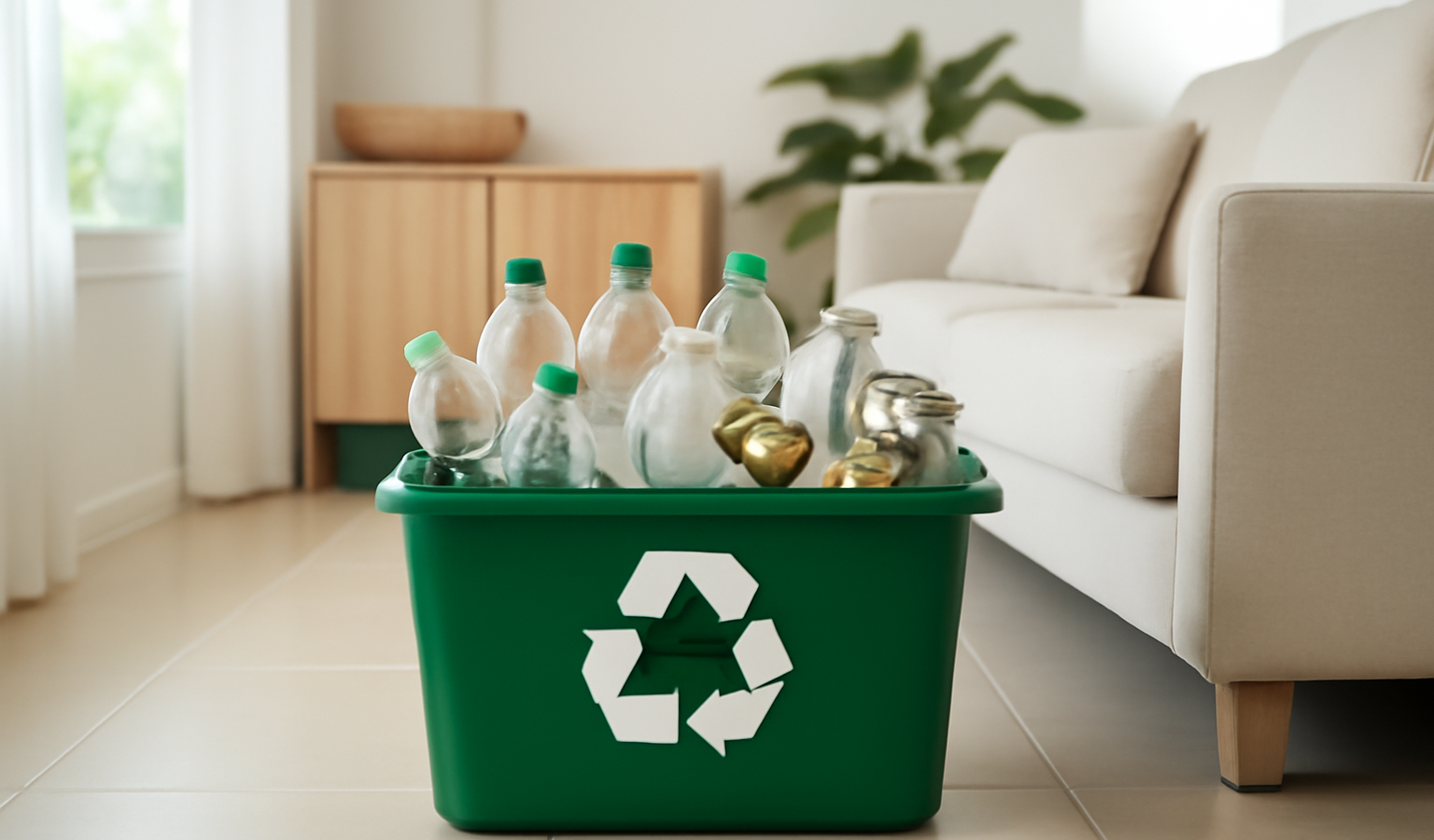
Most Singapore households live within a short walk of a blue recycling bin, and every HDB block built in recent years has recycling chutes or bins at the void deck. Yet plenty of well-intentioned recycling still goes wrong — greasy bento boxes contaminating a whole load, tissues tossed in with paper, a toaster balanced on top of the bin. Setting up recycling at home is less about virtue and more about system design: know the few rules that matter, build a two-second habit at the kitchen counter, and the rest runs itself. Here is the full picture, from blue bins to e-waste.
How Singapore’s blue bin system works
Under the National Recycling Programme overseen by NEA, the familiar blue bins are commingled — you do not sort paper, plastic, glass and metal into separate bins. Everything goes in together and is machine- and hand-sorted later at materials recovery facilities. HDB estates have blue bins at blocks (and newer developments have dedicated recycling chutes on each floor), condos are required to provide recycling facilities, and landed homes have their own recycling bin collected on a scheduled day.
The system’s simplicity is its strength — one bin, four material types — but it depends entirely on what residents put in. The two rules that carry almost all the weight: recyclables must be clean and dry, and no food or liquids. A half-finished bubble tea poured into a blue bin can soak and ruin the paper and cardboard beneath it.
What goes in — and what quietly doesn’t
Yes: paper and cardboard (newspapers, magazines, flattened boxes, letters), plastic bottles and containers (drink bottles, shampoo bottles, clean food containers), glass bottles and jars, and metal drink and food cans. Rinse containers briefly, shake dry, and flatten what flattens.
No, even though people try:
- Food-soiled packaging — the oily pizza box, the laksa-stained container. Grease cannot be processed out of paper fibre.
- Tissues, paper towels and receipts — used tissues are waste; thermal receipts are not recyclable paper.
- Styrofoam — not accepted in blue bins in Singapore.
- Plastic bags and film in loose tangles — clean plastic bags are technically acceptable in Singapore’s system, but bagged rubbish disguised as recycling is a chronic contaminant; when in doubt, check NEA’s current list.
- Textiles and shoes — old clothes go to textile recycling points or donation, not blue bins. Wearable items do more good donated; see where to donate used items in Singapore.
- Electronics, batteries and bulbs — never in blue bins; they have their own system, covered below.
When you genuinely cannot tell, NEA’s website and bin labels are the authority — and the honest fallback is that a doubtful, dirty item does less harm in the general waste chute than contaminating the blue bin.
E-waste: the separate track
Electrical and electronic waste is regulated separately in Singapore under a producer-responsibility scheme, because it contains both valuable recoverable materials and hazardous components. That means dead phones, cables, chargers, laptops, batteries, power banks, bulbs and small appliances go into dedicated e-waste bins — the distinctive collection bins placed at community locations, town squares and participating retailers island-wide — not the blue bin and not the rubbish chute. Different bin apertures accept different item sizes, and battery and bulb slots are usually separate.
For larger items — a dead microwave, a broken printer — options include larger e-waste collection points, retailer take-back when a new appliance is delivered, and scheduled collection drives in some estates. Genuinely bulky electricals like fridges and washing machines fall under bulky item disposal instead; our guide to disposing of bulky items in Singapore explains the free HDB town council removal service and private options.
Designing a home setup that actually sticks
Recycling fails at home for one boring reason: the recycling container is further away than the rubbish bin. Fix the geography and the habit follows.
- Two containers, side by side, in the kitchen. General waste and recycling, equally convenient. A simple open tub or a second pedal bin is fine — it does not need to be blue.
- A rinse-and-drain habit. Rinse containers during the washing-up you were doing anyway; let them drain on the rack, then toss them in.
- A small e-waste box in a drawer. A shoebox for dead batteries, cables and gadgets, emptied into an e-waste bin once a quarter, keeps hazardous items out of the chute.
- A flatten-as-you-go rule for cardboard. Boxes flattened immediately take a tenth of the space and make the trip downstairs painless.
- A paper bag for paper if you generate lots of mail and packaging — carry the whole bag down and drop it in.
If you live in a newer block with a recycling chute on your floor, you have no excuse at all — the marginal effort over general waste is a few steps. And after a house move, when you are drowning in cardboard, flatten the boxes and stack them beside the blue bin rather than stuffing them in — or list them free online, since someone else moving next month will happily collect them the same day.
Reduce and rehome before you recycle
Recycling is the third-best outcome for most objects. Anything still usable — clothes, books, toys, kitchenware, furniture — does more good sold or given away than pulped or melted. Singapore’s second-hand scene is active enough that decluttering can fund your next purchase; see what’s worth buying (and selling) used in Singapore for a sense of what holds value. Freecycling groups and donation drives absorb much of the rest.
Upstream of that, the highest-leverage move is generating less: a refillable bottle, saying no to cutlery with delivery, choosing products with less packaging. None of this is novel advice, but it shrinks the bin problem before it exists.
Common myths, corrected
“It all gets burned anyway.” Blue bin contents go to materials recovery facilities for sorting; contaminated items get rejected, which is exactly why the clean-and-dry rule exists. Cynicism about the system becomes self-fulfilling when it leads people to contaminate bins.
“I need to remove every label and cap.” Modern processing handles labels and caps; a quick rinse matters far more than cosmetic perfection. Do not let fiddly perfectionism kill the habit.
“Recycling in a chute bag is fine.” Recyclables should go in loose or in a clear bag at most — an opaque knotted bag looks like rubbish to sorters and may be pulled out.
The bottom line
Recycling at home in Singapore is deliberately easy: one commingled blue bin for clean, dry paper, plastic, glass and metal; dedicated e-waste bins for anything with a plug or battery; donation and bulky-item channels for the rest. Set up a two-bin kitchen corner and a drawer box for e-waste, keep food out of the blue bin, and check NEA’s guidance when unsure. Ten minutes of setup, and the system runs on autopilot — a small piece of running a home well, alongside the rest of our moving and home setup guides.
Frequently asked questions
What can I put in the blue recycling bins in Singapore?
Clean paper and cardboard, plastic bottles and containers, glass bottles and jars, and metal cans — all in one commingled bin, rinsed and dry. No food waste, tissues, styrofoam, textiles or electronics. Check NEA's guidance for the full list.
Do I need to sort recyclables into separate bins?
No — Singapore's National Recycling Programme uses commingled blue bins, so paper, plastic, glass and metal go in together and are sorted at materials recovery facilities. Your job is just to keep items clean, dry and free of food.
Where do I recycle e-waste in Singapore?
Use the dedicated e-waste bins located around the island at community locations and participating retailers under the national e-waste scheme, or retailer take-back when buying replacements. Batteries, bulbs, phones and small appliances go there — never into blue bins.
Do recyclables in blue bins actually get recycled?
Blue bin contents are sent to materials recovery facilities for sorting and processing. Contamination is the main reason items get rejected — food-soiled or wet items can spoil surrounding recyclables — which is why the clean-and-dry rule matters.
More in Moving & Home Setup
See all
Cheap Storage Options in Singapore (2026)
Looking for cheap storage in Singapore? Learn to declutter first, weigh self-storage costs and find budget alternatives like box storage, shared and…

A Realistic Home Cleaning Schedule (2026)
A realistic home cleaning schedule for busy Singapore households: daily 10-minute resets, weekly rotations, monthly deep tasks and when to outsource.

Move or Renovate? How to Decide (2026)
Move or renovate? A practical framework for Singapore homeowners: compare true costs, disruption, what renovation can and cannot fix, and when moving…