
A Walk-In Wardrobe on a Budget (2026)
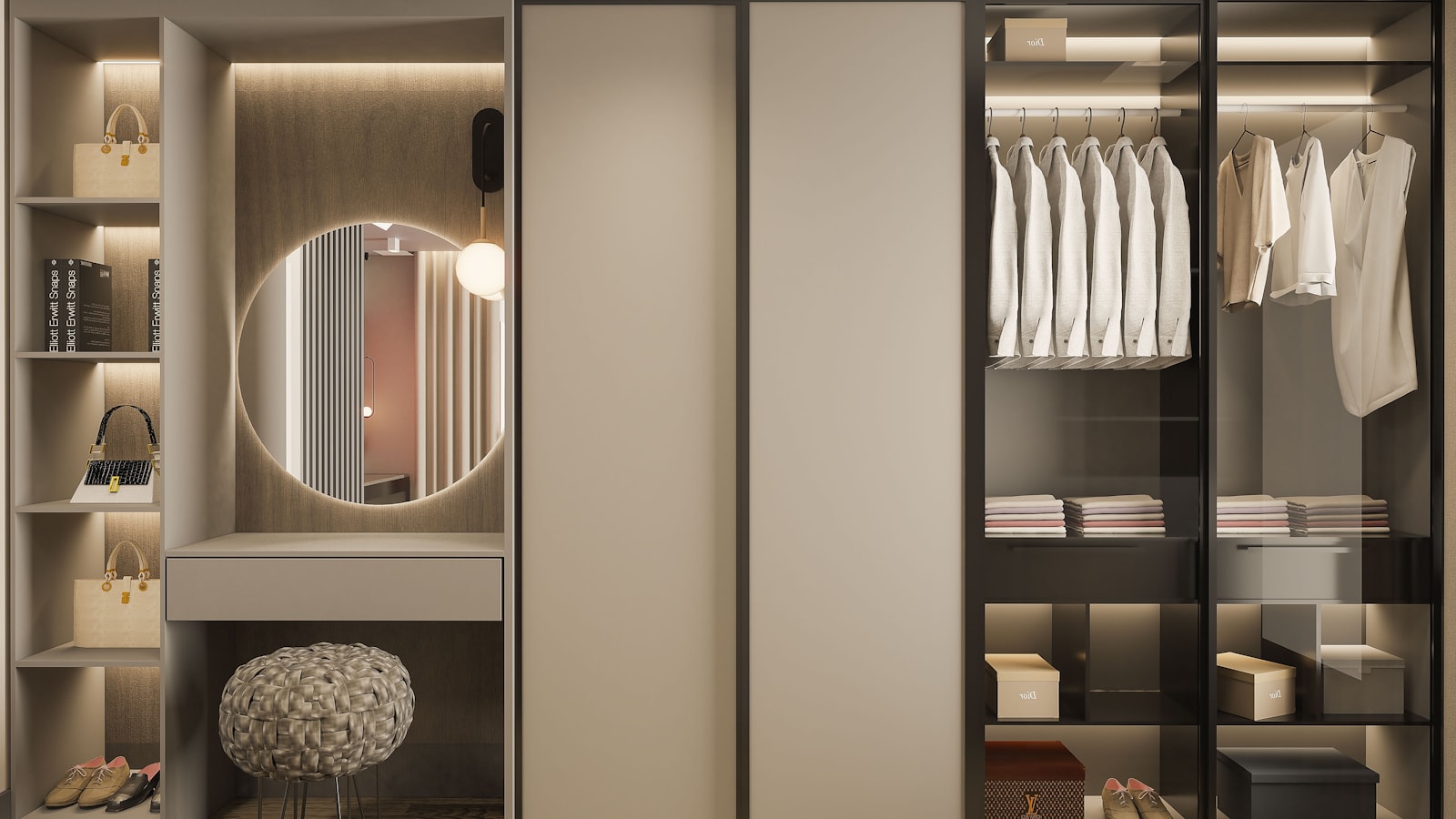
The walk-in wardrobe sits near the top of most home wishlists, filed under “one day, when we have space and money”. Here is the secret the renovation industry does not advertise: the walk-in experience — everything visible, everything reachable, a dedicated dressing zone — is mostly a layout achievement, not a carpentry one. With open racking, a spare corner and some planning, you can build a genuinely good walk-in for a fraction of the built-in price. Here is how, measured for Singapore homes.
What a walk-in actually requires
Strip the concept to its bones and a walk-in wardrobe is three things: storage you stand inside or beside rather than reach into through doors, visibility of your whole wardrobe at once, and a place to dress. None of that demands a dedicated room. The space minimums are modest: clothes on hangers need about 60cm of depth, and a human needs 60–75cm to stand and move. That means a single-sided walk-in fits in a strip roughly 1.2–1.5m deep along one wall, and an L-shaped or double-sided version fits in about 2m.
In practice, Singapore homes hide several qualifying spaces: the awkward end of a master bedroom, the HDB storeroom, a corner of the spare room that currently stores regret, or the dead zone behind a bedroom door. The classic master-bedroom move is placing a rack run along the wall behind the bed or using open systems to carve a dressing strip — effectively a walk-in without walls.
The budget hierarchy: from clothes rack to carpentry
Every walk-in solution sits on a cost ladder, and the trick is stopping at the rung that solves your problem. At the bottom, freestanding garment racks — sturdy metal ones, not the wobbly chrome kind — cost tens of dollars each and create instant open hanging. One step up, modular open racking systems (pole-and-shelf or grid systems from major furniture and DIY retailers) combine hanging, shelves and drawers into configurable walls of storage, typically landing a full setup in the low hundreds to around a thousand dollars depending on size and add-ons — treat that as a rough guide and price your own configuration.
Freestanding open wardrobes — frames without doors — split the difference between racking and furniture. And at the top sits custom carpentry, which delivers the magazine finish at several times the modular price. The honest question: how much of that premium is function, and how much is doors? If the answer is doors, a curtain costs twenty dollars. For where to hunt the hardware cheaply, our guide to affordable furniture in Singapore covers the retailer landscape, and second-hand racking is abundant and nearly indestructible.
Designing the layout: zones beat furniture
Plan the interior like a tiny shop. Double-hang short items — shirts and folded-length pieces in two rails stacked vertically — to double capacity in the same width; reserve a single long-hang section for dresses and coats (a short section suffices in this climate). Allocate shelves at eye level for folded knits and bags, drawers or boxes below waist height for smalls, and the top shelf for luggage and off-season storage. Shoes do best on slanted or flat racks at the bottom, or in clear stackable boxes.
Measure your actual wardrobe before buying anything: count hanging items versus folded, note your longest garments, and let those numbers set the rail-to-shelf ratio. Most people discover they need far more double-hang and far less long-hang than default configurations assume. Leave one empty section — wardrobes, like schedules, need slack to stay organised.
Singapore-proofing: dust, humidity and mould
Open storage meets tropical reality in two ways, both manageable. Dust settles on exposed shoulders and shelves, so give the setup a defence: a simple ceiling-track curtain across the racking (the budget walk-in’s best friend), a lightweight sliding panel, or garment covers over the rarely worn end of the rail. Rotate seldom-used items into lidded boxes rather than leaving them to gather grime.
Humidity is the sneakier enemy: leather goods and natural fibres can grow mould in still, damp corners. Keep air moving — open wardrobes actually beat sealed ones here — but protect enclosed drawers and boxes with moisture-absorber packs, replaced when full. Position the wardrobe zone away from bathroom walls and windows that catch rain, and give everything a fan-and-airing session occasionally. If the room runs damp, a dehumidifier pays for itself in saved shoes; our comparison of dehumidifiers versus aircon for humidity covers the options.
Lighting and mirrors: the cheap upgrades that sell the illusion
Two finishing touches separate “clothes rack in a corner” from “walk-in wardrobe”, and neither is expensive. Lighting: bedrooms rarely light their wardrobe zones properly, so add rechargeable LED strips or puck lights under shelves and along rails — motion-sensor versions turn on as you approach, which feels absurdly premium for the price. Aim for neutral white light so colours read true when you dress.
A full-length mirror completes the dressing-zone function and doubles the space visually — a leaning mirror at the end of the racking run is the classic move, and our guide on using mirrors to enlarge small spaces explains placement in detail. Add a stool or bench if space allows, and a tray for the daily pocket-dump, and the zone starts behaving like a room.
Renter-friendly and reversible setups
The budget walk-in is naturally renter-shaped: freestanding racks and modular systems assemble without drilling, disassemble flat for the next move and reconfigure to fit a different room. Tension-pole systems that brace between floor and ceiling add height-storage without a single screw hole. Skip wall-mounted rail systems unless your landlord approves drilling in writing, protect flooring under heavy uprights with felt pads, and anchor anything tall and tippy using removable methods if children share the home.
For those furnishing a whole rental on a budget, the same modular logic extends across the flat — our guide to furnishing a rental in Singapore on a budget continues the theme. And when you eventually leave, the walk-in leaves with you: try that with carpentry.
Once built, the system needs habits to stay a wardrobe rather than become a clothes mountain with lighting. Two rules do most of the work: everything returns to its zone the same day it comes off the drying rack, and one-in-one-out applies whenever a rail reaches capacity. A quarterly cull — anything unworn in a year goes to donation or resale — keeps the setup at the density it was designed for, which is the real difference between the walk-ins in magazines and the ones in real flats.
The bottom line
A walk-in wardrobe is a layout, not a luxury: 1.2–1.5m of depth, open racking configured to your actual clothes, a curtain against dust, moisture packs against humidity, and lighting plus a mirror to complete the dressing zone. Spend on solid rails and good light, save on everything else, and stop at the rung of the cost ladder that solves your problem. The magazine version costs thousands; the version that works costs a weekend and a few hundred dollars — and it moves house with you.
Frequently asked questions
How much space does a walk-in wardrobe need?
For a single-sided walk-in, allow roughly 60cm of storage depth plus at least 60–75cm of standing space — about 1.2–1.5m total depth. A double-sided walk-in needs around 2m. Corners of bedrooms and HDB storerooms can qualify.
How much does a budget walk-in wardrobe cost in Singapore?
Using open racking or freestanding wardrobe systems, a modest setup can come together for the low hundreds to around a thousand dollars, versus several thousand for custom carpentry. Prices vary widely, so treat these as rough guides.
Is an open wardrobe practical in Singapore's climate?
Yes, with dust management: a simple curtain or lightweight sliding door over the racking, regular cleaning, and rotating rarely worn items into covered boxes keep dust and humidity from becoming a problem.
Can renters build a walk-in wardrobe?
Absolutely — that is the sweet spot for freestanding racks and modular systems, which assemble without drilling, move with you, and reconfigure for the next home. Just check floor protection and avoid wall-mounted systems unless the landlord agrees.
More in Furniture & Homeware
See all
Storage Ottomans & Benches: A Buying Guide
A storage ottoman or bench adds hidden storage and seating in small SG flats. Our buying guide covers types, sizes, materials, lids…

How to Measure for Curtains (2026)
How to measure curtains for Singapore homes: rod and track width, drop options, fullness ratio and day-and-night layering, all in cm and…

How to Measure a Room for Furniture (2026)
Learn how to measure a room for furniture step by step: length, width, doorways, delivery access, power points and walkways, plus a…