
Transferring a Warranty When Buying Second-Hand (2026)
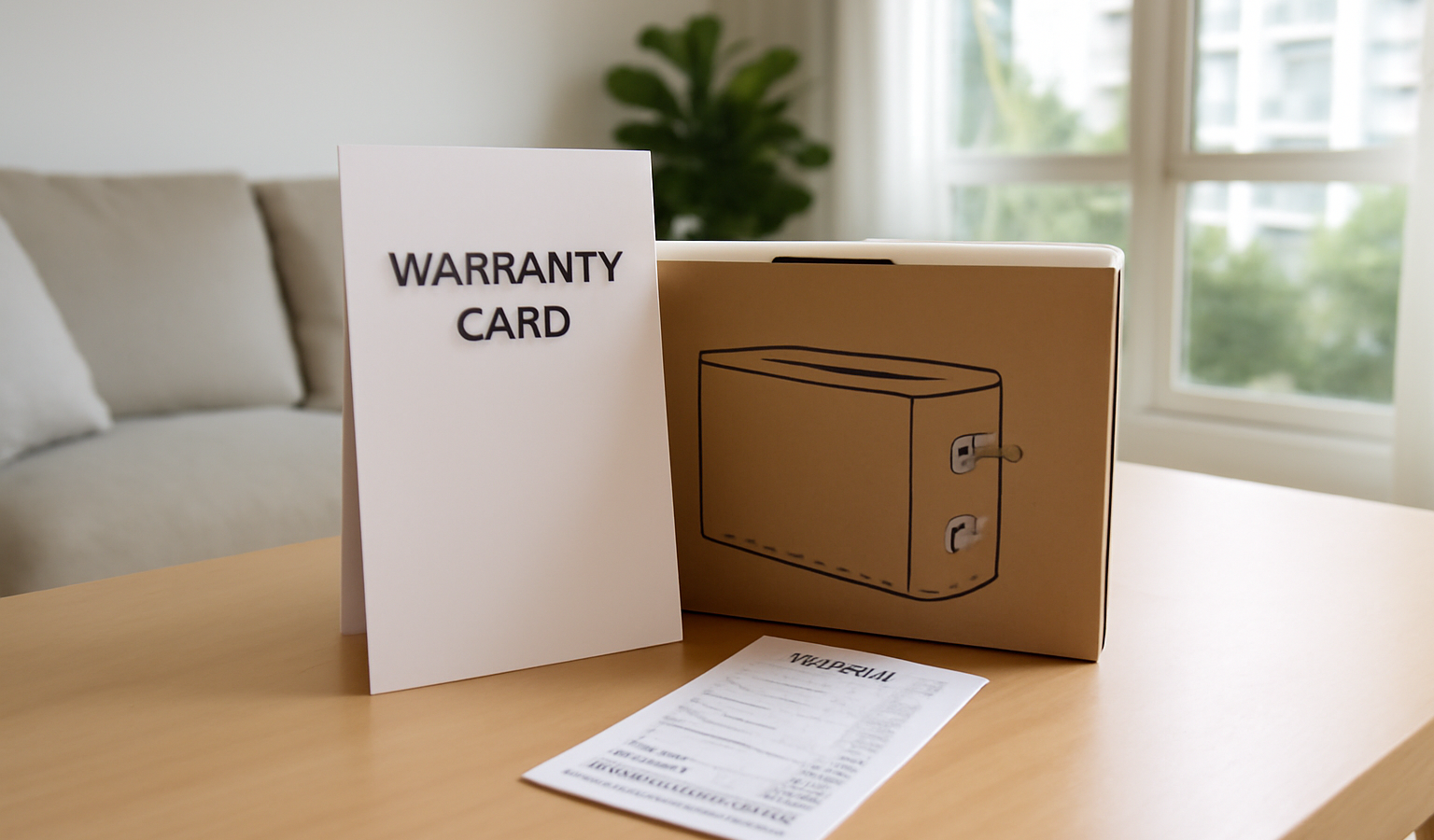
You have found a nearly new appliance at a great price, and the seller says “still under warranty.” It sounds reassuring, but that phrase does a lot of quiet work, and it often does not mean what a buyer hopes. Whether any coverage actually follows the product to you depends on the brand, the type of warranty, and where the item was originally bought. Getting this wrong can turn a bargain into an expensive repair.
This guide explains how a warranty transfer for second-hand goods really works in Singapore, what commonly does and does not carry over, and the exact questions to ask before you hand over money. None of this is legal advice, warranty terms vary by brand and change over time, so always confirm the specifics for the item in front of you.
Warranties are not all the same
The word “warranty” covers several different things, and they behave differently when an item changes hands:
- Manufacturer warranty. Provided by the brand, usually one to a few years. Transferability depends on the brand’s policy.
- Retailer or store warranty. Offered by the shop, sometimes on top of the manufacturer’s. Frequently tied to the original buyer.
- Extended warranty. A paid add-on. These are often explicitly non-transferable, or require paperwork to move.
Before you value a second-hand item on its “remaining warranty,” find out which of these is actually in play. A remaining manufacturer warranty that transfers is worth something, an extended plan locked to the first owner may be worth nothing to you.
The big one: does it transfer at all?
Here is the part buyers most often get wrong. Many manufacturer warranties are tied to the original purchase and require the original proof of purchase to make a claim. In practice, some of these will still honour a repair as long as the item is within the warranty period and you can produce the original receipt, because the coverage effectively follows the product and its purchase date.
Others are explicitly registered to the first owner and will not cover a second-hand buyer at all. And some brands sit in between, allowing a formal transfer if you register it. The only safe approach is to check the written terms for that specific product, or contact the brand’s Singapore service line and ask directly whether a second owner is covered.
Local set versus parallel import: this matters most
In Singapore, the most important distinction is often not who owns the item but how it entered the country. A local set is sold through the brand’s authorised local distributor and carries a warranty that is valid and serviceable here. A parallel import (also called a grey set) is brought in outside official channels, it may be genuine and brand new, but it typically has no local authorised warranty.
This trips up a lot of second-hand buyers. A seller can honestly say an item is “new and unused” while it still has zero local coverage, because it was a grey import to begin with. If warranty matters to you, confirm the unit is a local authorised set, and that the seller can show it. This is the same care you would apply to buying any electronics second-hand, our guides on buying a used laptop in Singapore and what is worth buying used cover the wider checks.
Grey sets are not automatically a bad deal, they can be genuine, cheaper, and perfectly reliable. The point is simply to price them correctly. If a unit has no local warranty, its value should reflect that, and you should be comfortable covering any repair yourself. Problems arise when a buyer pays a local-set price expecting local-set coverage that was never there.
What to ask the seller
A few direct questions separate a real remaining warranty from a hopeful one. Ask the seller to confirm:
- The original invoice or receipt. With a visible purchase date and retailer, this is the document most claims depend on.
- The serial number. You can often check remaining coverage and authenticity with the manufacturer using this.
- Local authorised set or not. Ask plainly, and be cautious if the answer is vague.
- How much warranty is left. Confirm the purchase date so you can calculate it yourself.
- Whether transfer is allowed, and how. If the brand supports it, ask the seller to complete or start the transfer before payment.
Getting clear, documented answers is part of vetting the seller generally. Our walkthrough on how to verify a seller on Carousell pairs well with these warranty checks.
Category quirks: cars, appliances and electronics
Different categories handle transfers differently. For appliances like fridges, washers and aircon, coverage often hinges on the original receipt and whether it is a local set, keep every document. For consumer electronics, serial-based registration is common, and parallel imports are widespread, so the local-set question is decisive.
Cars are a separate world. Vehicle warranties and any transfer generally run through the authorised dealer, and ownership changes are handled through the proper LTA process, this is well outside a casual second-hand purchase and should be confirmed with the dealer directly. In all cases, do not assume, verify with the party that would actually service the claim.
Furniture and larger homeware are worth a mention too. These often carry shorter warranties or structural guarantees that are heavily dependent on the original receipt and, sometimes, on the item not having been moved or dismantled. For anything assembled at home, ask whether relocating it affects coverage, and factor that into what the remaining warranty is really worth to you.
Protecting yourself when coverage is unclear
Sometimes you will not be able to confirm coverage with certainty. In that situation, price the item as if it has no warranty, and treat any coverage that does come through as a bonus. Keep the original invoice, the seller’s contact details and your transaction records in case you need them later.
It also pays to test the item thoroughly at handover and to buy from sellers who meet in person and let you inspect. A working demonstration today is worth more than an uncertain promise of future repair. For safe meetups and payment, the Carousell buying and selling safety guide covers the essentials, and the broader buying and selling hub links to related topics.
The bottom line
“Still under warranty” is a starting point for questions, not a guarantee. Whether a warranty transfers to you depends on the brand’s policy, the type of warranty, and above all whether the item is a local authorised set rather than a grey import. Ask for the original invoice and serial number, confirm the coverage directly with the manufacturer where you can, and register any transfer the brand actually allows. When coverage cannot be confirmed, value the item on its own merits and treat any warranty as a happy extra. Policies vary and change, so verify the specifics before you buy.
Frequently asked questions
Do manufacturer warranties transfer to the second owner?
It depends entirely on the brand. Some warranties follow the product and transfer freely, others are tied to the original purchaser and proof of purchase and do not transfer. Check the specific warranty terms for that model before assuming coverage exists.
What is the difference between a local set and a parallel import?
A local set is sold through the brand's authorised Singapore distributor and carries a warranty valid here. A parallel or grey import is brought in outside official channels and usually has no local warranty, even if the unit is genuine and new.
What should I ask the seller before buying?
Ask for the original invoice or receipt, the serial number, whether the item is a local authorised set, how much warranty remains, and whether the brand allows transfer. Verify the serial with the manufacturer if you can.
Can I register a warranty transfer myself after buying?
Sometimes. A few brands let a new owner register a transfer online with the serial number and proof of purchase. Many do not offer this at all, so confirm the process exists before you rely on it.
More in Buying & Selling Used
See all
Spotting Water-Damaged Electronics Before You Buy (2026)
Water damaged electronics look fine until they die. How to spot liquid damage on used phones, laptops and gadgets: indicators, corrosion clues…

Preloved Wedding Dresses & Items: Buying & Selling (2026)
A preloved wedding dress can cost a fraction of retail. Where Singapore couples buy and sell gowns, decor and kua, what to…

How to Photograph Items So They Sell (2026)
Better product photos second hand buyers trust: window light, clean backgrounds, the shot list that answers every question and phone settings that…