
Living in Punggol: A Neighbourhood Guide (2026)

Punggol is Singapore’s showcase for what a new town can be: a waterfront estate designed from a blank canvas, threaded with a man-made waterway, parks and cycling paths, and filling up with young families. If you want newer flats, greenery and a fresh community rather than the density of an older estate, Punggol has a strong pitch. This guide covers what living here is really like, from transport and shopping to the jobs arriving on the town’s doorstep.
Where Punggol sits and who it suits
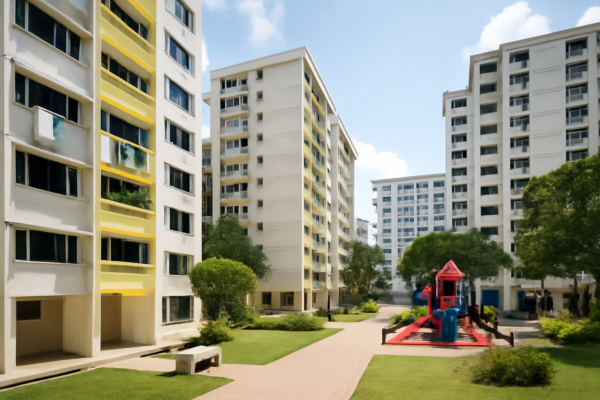
Punggol occupies the north-eastern corner of the island, bordered by Sengkang and the coast. It was redeveloped as an eco-town built around a central waterway, and much of its housing stock is relatively new. That youthful character shapes the whole neighbourhood: playgrounds, young couples, prams, and a planned, orderly layout rather than the organic sprawl of older towns.
It suits first-time buyers, young families and anyone who prioritises a new flat and outdoor space over being close to the city core. If a short commute to the central business district is your top priority, Punggol may feel far; if lifestyle and value matter more, it is compelling.
Getting around: MRT, LRT and roads
Punggol runs on the North East Line, with Punggol station as the main interchange linking the MRT to the two LRT loops, Punggol East and Punggol West, that thread through the residential clusters. The LRT is genuinely useful here, connecting inner blocks to the town centre without a long walk.
The newer Punggol Coast station has extended the line further north into the developing districts, improving access as the town grows. Drivers reach the rest of the island via the TPE and KPE. The honest caveat is distance: the ride into the central city is longer than from mature central towns, so factor your commute into any decision. Our guide to the best areas near the MRT on a budget puts Punggol in context against other options.
The waterway and green spaces
Punggol’s defining feature is its waterway, a landscaped water corridor lined with cycling and jogging paths that runs through the heart of the town. Punggol Waterway Park, the promenade along the coast and nearby Coney Island give residents an unusual amount of accessible nature for a Singapore new town.
For active households and families with young children, this is a real quality-of-life draw. Weekend cycling, riverside walks and open park space are all a short ride away, which is harder to find in denser, older estates.
Shopping, food and daily needs
The town centre is anchored by a large waterfront mall with supermarkets, dining, a cinema and the usual chain retail, plus community facilities integrated nearby. Neighbourhood shops, coffee shops and hawker options are spread through the residential clusters, and the seafood eateries at the Punggol Settlement are a well-known local outing.
For most day-to-day needs, Punggol is self-sufficient, though the retail depth does not yet match a long-established town with several competing malls. As the estate matures and the Digital District fills in, that offering continues to broaden.
The Punggol Digital District
One of Punggol’s most significant developments is the Punggol Digital District, a planned business and innovation cluster that brings offices and a university campus into the town itself. The idea is to put jobs closer to where people live, cutting commutes for residents who work in tech and related fields.
For buyers thinking long term, this matters. A town with employment arriving on its doorstep is better positioned than a pure dormitory estate, and it supports the case for Punggol as more than just affordable housing far from the action.
Schools and families
Punggol is heavily oriented toward young families, with a growing spread of primary schools, childcare centres and enrichment options across the estate. Because the town is still maturing, school placement and capacity can shift, so it is worth checking current provision near any block you are considering.
If you are buying your first home here, our first-time HDB buyer guide walks through eligibility, grants and the buying process, and the best neighbourhoods for families guide compares Punggol against other family-friendly towns so you can weigh the trade-offs.
Property types and rough costs
Punggol’s housing is predominantly newer HDB flats, including many recent BTO projects, alongside a number of executive condominiums and private developments around the waterfront. Because much of the stock is newer and further from the centre, entry prices can be more accessible than central mature towns, though sought-after waterfront blocks still carry a premium.
As a rough guide only, treat Punggol as offering relatively good value on newer flats, with the trade-off priced into the longer commute. These figures move with the market, so verify against live listings. If you are still deciding how to buy, our comparison of BTO versus resale flats is a good next read for a town with plenty of both.
The trade-offs to weigh
Punggol’s newness is both its charm and its catch. Because it is still maturing, some parts of the town remain works in progress, with construction, developing amenities and a retail scene that is broadening rather than fully settled. Buyers drawn to the promise of the Digital District should remember that big plans take years to fully realise.
The commute is the honest sticking point. Sitting in the north-east, Punggol is one of the further towns from the central city, and while the North East Line is direct, the journey is longer than from central estates. Households with one or two members working in the CBD should test the door-to-door time before committing, since a long daily commute can quietly erode the lifestyle gains the town offers.
Against that, few towns offer this combination of newer flats, waterfront greenery and relative value, with employment arriving on the doorstep. The verdict really depends on your priorities: if a fresh, green, family-friendly environment matters more than proximity to the centre, Punggol is compelling. The smart move is to visit at different times, walk the waterway and the town centre, and picture your actual daily routine rather than the show-flat fantasy before you decide.
The bottom line
Punggol is the modern Singapore new town done deliberately: newer flats, a landscaped waterway, generous parks and jobs arriving via the Digital District, all wrapped in a young, family-heavy community. The main compromise is distance from the central city, so the commute is the number to test against your own routine. If you value a fresh, green, well-planned environment and reasonable entry prices, Punggol deserves a serious look. When you want to explore specific units here, get matched with a licensed agent below.
Frequently asked questions
Is Punggol a good place to live?
Punggol suits young families and first-time buyers who want newer flats, waterfront parks and a fresh, planned environment. The main trade-off is a longer commute into the central business district compared with older, more central towns.
How do you get around Punggol?
Punggol is served by the North East Line at Punggol station, plus the Punggol East and West LRT loops that thread through the estate. The newer Punggol Coast station extends the line further north into the developing districts.
Are flats in Punggol cheaper than mature towns?
Because much of Punggol's housing stock is newer and further from the centre, entry prices can be more accessible than in central mature towns, though popular waterfront blocks still command a premium. Always check current listings.
What is the Punggol Digital District?
The Punggol Digital District is a planned business and innovation cluster that brings offices and a university campus into Punggol itself. It aims to put jobs closer to where people live and cut commutes for residents in tech and related fields, supporting Punggol as more than a dormitory estate.
How does the LRT work in Punggol?
Punggol station on the North East Line is the main interchange linking the MRT to two LRT loops, Punggol East and Punggol West, that thread through the residential clusters. The LRT connects inner blocks to the town centre without a long walk.
Is Punggol far from the city centre for commuting?
Yes, distance is the honest caveat. Punggol is in the north-eastern corner of the island, and the ride into the central city is longer than from mature central towns. Factor your commute into any decision, especially if a short commute to the CBD is your top priority.
What outdoor spaces does Punggol offer for families?
Punggol's defining feature is its waterway, a landscaped water corridor lined with cycling and jogging paths. Punggol Waterway Park, the coastal promenade and nearby Coney Island give families unusual access to nature for a Singapore new town, with weekend cycling and riverside walks a short ride away.
Speak to a property agent
Looking to rent or buy? We’ll connect you with a licensed agent for your area and budget.
More in Property & Rentals
See all
HDB Buying Jargon: A Glossary for First-Timers (2026)
Confused by HDB jargon? This plain-English glossary explains BTO, MOP, OTP, HFE, COV, EIP, CPF grants and more so first-time flat buyers…

Suburban vs City HDB Living: Which Suits You? (2026)
Suburban vs city HDB living in Singapore: compare price, space, commute, MRT access, amenities and BTO supply so you can pick the…
HDB Eligibility Schemes and the Family Nucleus (2026)
Understand HDB eligibility schemes and the family nucleus rule: the Public, Fiance/Fiancee, Single and Joint Singles routes to buying an HDB flat.